Your email subject line is the gatekeeper to your message. It's the single line of text that determines whether a subscriber clicks "open" or "delete" without a second thought. In an inbox cluttered with promotions, updates, and notifications, a generic or poorly crafted subject line is a guaranteed path to the trash folder. Mastering the art and science of writing compelling subject lines is no longer an optional skill for marketers; it’s a fundamental requirement for campaign success.
This guide moves beyond the tired, surface-level advice. We will provide a definitive list of email subject line best practices grounded in proven data, psychological principles, and modern marketing technology. You will gain actionable strategies that you can implement immediately to capture attention and drive engagement.
We will deconstruct ten critical elements, from advanced personalization using dynamic data and psychological triggers like FOMO, to the technical nuances of mobile optimization and A/B testing. We'll also explore how to synergize your subject line with the preheader text and even how to leverage innovative tools for a more cohesive user experience. Each practice is designed to be a distinct tool in your marketing arsenal.
By the end of this comprehensive roundup, you won't just have a list of ideas; you'll have a repeatable framework for crafting high-performing subject lines that not only boost your open rates but also strengthen customer relationships and directly contribute to your revenue goals. Let's transform your email strategy, one subject line at a time.
1. Personalization with Dynamic Data
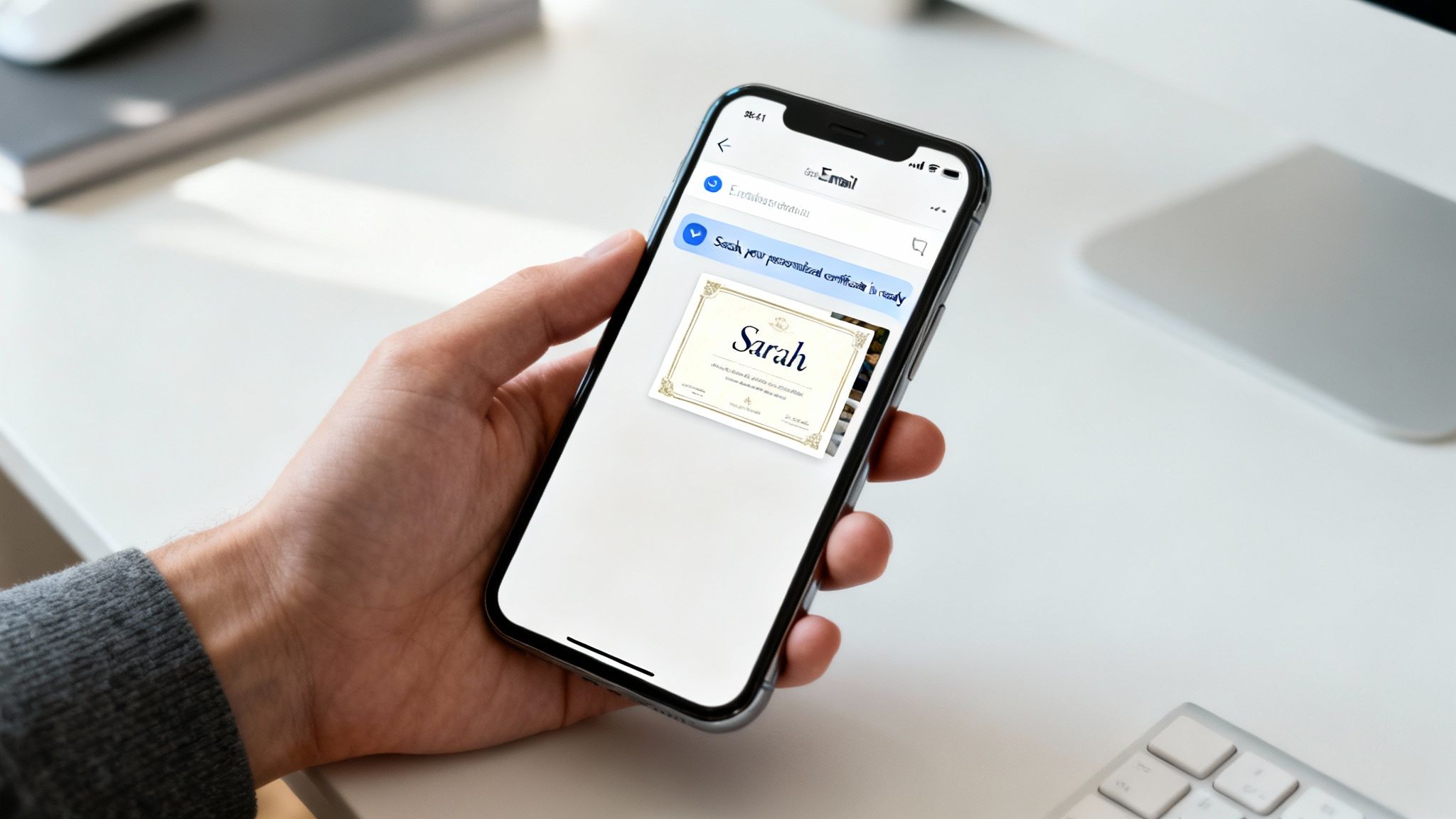
Personalization is a cornerstone of modern email marketing, and its power begins with the subject line. This practice involves using dynamic data, often through merge tags, to insert recipient-specific information directly into the subject line. Instead of a generic message, each subscriber sees a subject line that speaks to them individually, significantly boosting the chances of an open. This technique transforms a mass email into a one-to-one conversation.
This strategy goes beyond simply using a first name. It can include location, past purchase history, company name, or any relevant data point you've collected. The goal is to create a powerful sense of recognition and relevance before the recipient even opens the email. For a deeper dive into creating these individualized campaigns, you can explore the full potential of personalized email marketing.
Actionable Tips for Implementation
- Set Fallback Text: Always establish a default value (like "Valued Customer") for merge tags. This prevents awkward blank spaces or broken tags (e.g., "Hello, [FirstName]!") if a contact's data is missing.
- A/B Test Your Data: Don't just personalize; test which data points resonate most. Does
[FirstName]outperform[CityName]? Does mentioning a[PreviousPurchase]drive more opens? Use data to refine your strategy. - Maintain Data Hygiene: Your personalization is only as good as your data. Regularly clean and update your contact lists to ensure accuracy and avoid sending emails with outdated or incorrect information.
Subject Line Examples
- For E-commerce: "Sarah, your favorites from [ProductCategory] are back in stock!"
- For Events: "John, your attendee badge for [EventName] is confirmed."
- For B2B Sales: "Big news for companies in [CityName]!"
The OKZest Advantage
With OKZest, this personalization extends beyond text. You can create a powerful, cohesive experience by pairing a personalized subject line with a personalized image merge tag in the email body. Imagine a subject line like, "David, your custom certificate is ready," which opens to an email featuring an image of that exact certificate with David's name on it. This synergy between subject and content is a key differentiator, creating a memorable and highly effective interaction that captures attention from the inbox to the final call to action.
2. Subject Line Length Optimization
In email marketing, brevity is often the key to visibility. Subject line length optimization is the practice of crafting subject lines that are concise enough to display fully across all devices, particularly on mobile, where screen real estate is limited. With over half of all emails now opened on mobile devices, a subject line that gets cut off risks losing its impact and failing to communicate its core message, which can drastically reduce open rates.
This strategy is critical for ensuring your most compelling words are seen. The ideal length is a moving target, but aiming for 35-50 characters for desktop and 25-35 for mobile is a solid benchmark. This discipline forces you to be direct and powerful with your language, which is a core tenet of effective email subject line best practices. A message that is fully visible is more trustworthy and professional, encouraging an immediate open.
Actionable Tips for Implementation
- Front-Load Keywords: Place the most critical information and keywords at the very beginning of your subject line. This ensures the main benefit is communicated even if the end is truncated on smaller screens.
- Use a Character Counter: Integrate a character counting tool into your drafting process. Many email service providers have this built-in, but online tools are also readily available to keep your copy concise.
- Preview on Multiple Devices: Before sending, use preview tools to see how your subject line appears on various devices and email clients, such as iPhone, Android, and Outlook. What looks good on a desktop may not work on a phone.
- Eliminate Filler Words: Cut unnecessary words like "the," "a," and "and" when possible. Each character saved gives you more room for impactful language or personalization fields.
Subject Line Examples
- For E-commerce: "Sarah, your achievement badge awaits."
- For Events: "[EventName] certificate inside!"
- For B2B Sales: "Your personalized travel itinerary."
The OKZest Advantage
OKZest helps you maximize the impact of a short subject line. When a concise, personalized subject like "Your personalized certificate" is used, it needs to be backed up by an immediate visual payoff. OKZest’s image merge tags deliver on this promise by displaying a dynamically generated image with the recipient's name right inside the email body. This creates a seamless and powerful user experience, validating the subject line's claim instantly and driving engagement through a highly personalized visual reward.
3. The Power of Curiosity and FOMO
Harnessing human psychology is one of the most effective email subject line best practices. This approach leverages two powerful emotional triggers: curiosity and the Fear of Missing Out (FOMO). A curiosity-driven subject line intentionally withholds key information, creating an "information gap" that compels the recipient to open the email to find the answer. Similarly, FOMO subject lines create a sense of urgency by highlighting scarcity or limited-time opportunities, prompting immediate action.
These techniques work by moving past the logical part of the brain and appealing directly to a subscriber's desire not to be left out or left in the dark. A well-crafted curious or urgent subject line makes ignoring the email feel like a potential loss, dramatically increasing open rates. It transforms a standard email from a simple notification into an intriguing and time-sensitive event.
<img src="https://okzest.blob.core.windows.net/blog/close-up-of-a-smartphone-screen-displaying-a-message-you-ve-been-selected-for-something-special.jpg" alt="Close-up of a smartphone screen displaying a message: "You've been selected for something special..."." width="800">
Actionable Tips for Implementation
- Deliver on the Promise: Your email content must immediately satisfy the curiosity or validate the urgency created by the subject line. Failing to do so can erode trust and lead to unsubscribes.
- Be Specific with Urgency: Use precise numbers to create believable scarcity. "Only 24 hours left" is far more impactful than a vague phrase like "Ending soon."
- Test Language Across Segments: A/B test which trigger works best for different audience segments. Your VIP customers might respond well to exclusivity (FOMO), while a newer audience might be more receptive to curiosity.
Subject Line Examples
- For E-commerce: "Only 24 hours: Your exclusive offer expires"
- For Events: "The results of [EventName] are in (see your ranking)"
- For B2B Sales: "Don't let [CompetitorName] steal your spot"
- For Exclusive Content: "You've been selected for something special..."
The OKZest Advantage
OKZest amplifies the power of FOMO and curiosity by connecting the subject line directly to a personalized visual payoff. Imagine a subject line like, "Sarah, your limited-edition badge is waiting." When she opens the email, she doesn't just read about it; she sees an image of a badge with her name beautifully rendered on it. This synergy is incredibly powerful. The subject line creates the intrigue, and the personalized image in the email body provides instant, gratifying fulfillment, making the call to action almost irresistible. This technique turns a simple email into a memorable, personal experience.
4. Emoji Usage and Visual Hierarchy
In a crowded inbox, visual differentiation is a powerful tool. Emojis serve as a universal visual language, allowing you to add personality, convey emotion, and make your subject lines stand out instantly. This strategic use of symbols creates a visual hierarchy that draws the subscriber's eye, breaking the monotony of text-only subject lines and significantly boosting scannability and open rates.
This practice is more than just decoration; it's about efficient communication. An emoji can represent a complex idea or emotion in a single character, saving precious space and capturing attention faster than words alone. When used thoughtfully, emojis are a key component of modern email subject line best practices, helping brands appear more human and relatable.
Actionable Tips for Implementation
- Test Across Clients: Emojis can render differently on various email clients (Gmail, Outlook, Apple Mail) and devices. Always send test emails to ensure your chosen emojis display correctly and don't appear as empty boxes or garbled text.
- Use Sparingly and Strategically: Overloading a subject line with emojis can look spammy and unprofessional. A good rule of thumb is to use one or two relevant emojis to enhance your message, not distract from it.
- Ensure Contextual Relevance: The emojis you choose should directly relate to the content of your email. A graduation cap for a course completion email or a party popper for an event invitation reinforces the message instantly.
Subject Line Examples
- For Coaches/Courses: "🎓 [FirstName], your course certificate awaits!"
- For Events: "🎉 You're invited: [EventName] exclusive event."
- For Influencer Marketing: "📸 [FirstName], your personalized photo badge is ready."
The OKZest Advantage
OKZest helps you build a powerful, cohesive visual experience that starts in the inbox. You can pair an eye-catching emoji in the subject line with a dynamically personalized image inside the email body. For example, a subject line like "✨ Sarah, see your new profile card!" can open to an email showcasing a beautifully designed, personalized card with Sarah’s name and details. This seamless visual journey, from the emoji to the personalized graphic, reinforces your brand’s creativity and creates a highly memorable interaction that drives engagement.
5. A/B Testing and Data-Driven Iteration
Relying on guesswork for your subject lines is a missed opportunity. A/B testing, also known as split testing, is the practice of systematically comparing two or more versions of a subject line to determine which one performs better. This data-driven approach removes subjectivity and allows you to optimize your strategy based on your specific audience's behavior, not just general best practices. By testing one variable at a time, you can isolate what truly drives engagement.
This process is crucial for continuous improvement, helping you understand whether your audience responds better to emojis, questions, specific numbers, or a particular tone. Over time, these incremental gains lead to significantly higher open rates, click-throughs, and conversions. It transforms your email strategy from a static set of rules into a dynamic, evolving system that adapts to your subscribers' preferences.
Actionable Tips for Implementation
- Isolate a Single Variable: For a clean test, change only one element at a time. Test a long subject line against a short one, a question against a statement, or the presence of an emoji versus its absence.
- Ensure Statistical Significance: To trust your results, your test groups must be large enough. Aim to send each variation to at least 1,000 subscribers to ensure the outcome isn't due to random chance.
- Document Everything: Keep a log of your tests, including the variations, the winning subject line, and the key metrics (open rate, clicks). This repository of insights will guide future campaigns and onboard new team members.
Subject Line Examples
- Testing Personalization:
- A: "Michael, your weekly marketing report is here."
- B: "Your weekly marketing report is ready."
- Testing Emojis:
- A: "🎉 Final hours: 25% off everything!"
- B: "Final hours: 25% off everything!"
- Testing Tone:
- A: "Your certificate of completion is now available."
- B: "Congrats! Claim your achievement badge."
The OKZest Advantage
OKZest enhances your A/B testing capabilities by introducing a powerful new variable: personalized image previews. You can test a standard subject line against one that teases a unique, personalized image within the email. For example, test a subject line like, "Jenna, your custom event pass is ready," against one that hints at the visual content, like "Your personalized pass for [EventName] is waiting." This allows you to measure how the promise of a one-of-a-kind visual, created with OKZest's image merge tags, directly impacts open rates and sets your email apart before it’s even opened.
6. Segmentation-Based Subject Line Customization
Segmentation takes personalization a step further by tailoring subject lines to specific audience groups based on shared characteristics. Instead of a one-size-fits-all message, this practice involves crafting unique subject lines for different segments, such as demographics, purchase history, or engagement level. By aligning the message with the group's specific motivations and interests, you dramatically increase relevance and open rates.
This strategy recognizes that different audiences respond to different triggers. For example, a coach might be motivated by achievement-focused language, while a sales team could be more receptive to competitive messaging. Understanding these nuances is a key component of effective email subject line best practices. For a comprehensive guide on building these audience groups, you can explore these email segmentation best practices.
Actionable Tips for Implementation
- Segment Strategically: Create distinct audience segments based on job title, industry, engagement level (e.g., highly engaged vs. inactive), and purchase history.
- Create Segment Templates: Develop subject line templates for each major segment. This streamlines your workflow while ensuring the messaging remains targeted and effective.
- Use Behavioral Data: Let user actions guide your segmentation. Group users based on recent opens, clicks, or purchases to send highly relevant, timely messages.
- Review and Refine: Your segments are not static. Review and update them quarterly to ensure they accurately reflect your audience and their evolving behaviors.
Subject Line Examples
- For Coaches:
[FirstName], celebrate your client's achievement with this certificate! - For Agencies:
[AgencyName], save 5 hours/month with batch personalized images. - For Event Organizers:
[EventName] attendees: Claim your official participation certificate. - For Sales Teams:
[FirstName], here's a new way to beat the competition's close rate.
The OKZest Advantage
OKZest enhances segmentation by allowing you to connect segment-specific subject lines with perfectly aligned personalized images. Using merge tags, you can pull segment-specific data directly into the email's visual content. A subject line for a sales team promising a competitive edge can open to an email featuring a personalized award image that says "Top Performer." This creates a powerful, cohesive experience that resonates deeply with each unique audience segment, driving higher engagement from the inbox onward.
7. Action-Oriented Language and Clear Value Proposition
The most effective subject lines don't just describe what's inside an email; they command an action and promise a clear benefit. Using strong, action-oriented verbs at the beginning of your subject line instantly communicates purpose and encourages engagement. This approach shifts the message from a passive announcement to an active invitation, clearly telling the recipient what they can do or gain by opening the email. It answers the subconscious question, "What's in it for me?" before they even click.
This strategy is about framing the email's content as a tangible outcome or valuable opportunity for the recipient. Instead of saying "Your certificate is here," an action-oriented subject line says, "Claim your certificate." The first is informational, but the second creates a sense of ownership and urgency. This is a crucial element of crafting email subject line best practices because it directly links the open to an immediate reward, making the decision to engage much simpler for the user.
Actionable Tips for Implementation
- Lead with the Verb: Start your subject line with a powerful action word like "Claim," "Download," "Unlock," or "Discover" to immediately set an active tone.
- Focus on the Benefit: Always frame the action around the value to the recipient. "Download your guide" is better than "Our new guide is available."
- Use the Second Person: Address the recipient directly with words like "your" and "you" to make the value proposition feel personal and immediate.
- Test Verb Variations: A/B test different action verbs to see which ones motivate your audience most. Does "Get your ticket" outperform "Reserve your spot"?
Subject Line Examples
- For Certificates: "Claim your [EventName] completion certificate now"
- For Lead Magnets: "Download your free guide to email marketing"
- For Exclusive Content: "Unlock your early access pass for [CourseName]"
- For Gamification: "Discover your rank in the [CompetitionName] leaderboard"
The OKZest Advantage
OKZest enhances this strategy by ensuring the promised action leads to a visually compelling and personalized reward. When a subject line says, "Download your personalized achievement badge," the email doesn't just link to a generic file. It opens to reveal a stunning, custom-generated image of that very badge with the recipient's name and accomplishment displayed. This seamless transition from an action-oriented subject line to an immediate, personalized visual payoff creates a powerful and satisfying user experience that significantly boosts engagement and brand loyalty.
8. Urgency and Scarcity Messaging
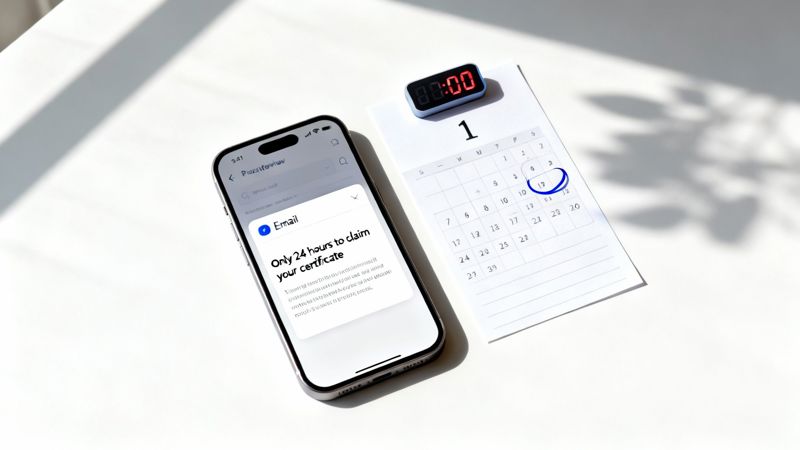
Urgency and scarcity are powerful psychological triggers that compel people to act. By incorporating time-sensitive language and indicators of limited availability into your subject lines, you can create a fear of missing out (FOMO) that encourages immediate opens and clicks. This approach frames your offer not just as an opportunity, but as a fleeting one that requires swift action. Instead of letting your email sit in the inbox, subscribers are motivated to see what they might lose.
This strategy is about communicating value through limitation, whether it's a deadline, limited spots, or exclusive access. It's one of the most effective email subject line best practices for driving conversions because it shortcuts the recipient's tendency to procrastinate. To amplify this effect, you can learn how to integrate a dynamic countdown clock for email campaigns.
Actionable Tips for Implementation
- Be Specific and Genuine: Vague urgency like "Act now!" is less effective than "Offer ends at midnight." Most importantly, only use scarcity when it's real. If you claim there are only 10 spots, don't sell 100. Breaking this trust will damage your brand credibility.
- Test Your Triggers: A/B test different types of urgency. Does a specific deadline (e.g., "Ends in 24 hours") perform better than limited quantity ("Only 5 spots left")? The answer often depends on your audience and offer.
- Avoid Overuse: Constant urgency leads to fatigue and skepticism. Reserve these tactics for genuinely time-sensitive campaigns, such as flash sales, event registrations, or limited-edition product drops, to maintain their impact.
Subject Line Examples
- For E-commerce: "Last chance, David: Your 25% off coupon expires tonight."
- For Events: "Only 10 spots left for the [WorkshopName] webinar!"
- For B2B Sales: "Your free trial of [SoftwareName] is ending in 3 days."
The OKZest Advantage
OKZest elevates urgency from a simple text-based tactic to a compelling visual experience. You can pair a subject line like, "Your exclusive offer expires at midnight," with a personalized image in the email body that features a live countdown timer. This dynamic visual reinforcement makes the deadline feel more tangible and immediate. Imagine a subject line saying, "Last chance, Maria, get your personalized badge," opening to an email with a graphic of that badge and a ticking clock, creating a cohesive and powerful call to action.
9. Preheader Text Optimization (Preview Text)
The preheader, or preview text, is the crucial snippet of copy that appears next to or below the subject line in an email client. It acts as a "second subject line," offering a valuable opportunity to expand on your message, add context, or spark curiosity. Ignoring this space often results in email clients pulling in default text like "View this email in your browser," wasting prime real estate that could be used to convince subscribers to open.
Strategically optimizing this text is a key component of email subject line best practices. A well-crafted preheader complements the subject line, providing a one-two punch that can significantly increase open rates. It's your chance to provide an extra incentive, hint at the value inside, or add a layer of personalization that a concise subject line couldn't accommodate.
Actionable Tips for Implementation
- Complement, Don't Repeat: Ensure your preheader adds new information. If your subject is "Your achievement awaits," the preheader should not be "See your achievement inside." Instead, it should expand on the idea.
- Mind the Character Count: Aim for 35-100 characters. Most mobile clients display this range, so front-load the most important information to ensure it's not cut off.
- Hide Default Text: Add a specific preheader text element at the very top of your email's HTML code. This prevents email clients from pulling in unwanted text, like your unsubscribe link, as the preview.
- A/B Test It: Just like your subject line, the preheader is a powerful variable. Test different versions to see what drives opens: a question, a benefit-driven statement, or a call to action.
Subject Line Examples
- Subject: Your achievement awaits
- Preheader: David, view your personalized completion certificate now.
- Subject: Limited time offer inside
- Preheader: Your exclusive [EventName] badge expires in 24 hours.
- Subject: We noticed you looking...
- Preheader: Get a special 15% discount on the items in your cart.
The OKZest Advantage
OKZest enhances the power of preheader text by connecting it directly to a unique visual experience. You can use the preheader to specifically mention the personalized image waiting inside. For example, a subject line of "Your Q3 Sales Report is Here" can be paired with a preheader that reads, "See your performance visualized on a custom infographic, Alex." This creates powerful anticipation for the unique, data-driven visual content, making the email feel less like a template and more like a bespoke communication crafted just for the recipient.
10. Mobile-First Design and Progressive Disclosure
With the majority of emails now being opened on mobile devices, a mobile-first approach to subject lines is no longer optional; it's essential. This strategy involves designing your subject line to be impactful even when truncated on smaller screens. Progressive disclosure is a key technique within this framework, where you strategically front-load the most critical information, creating a message that captures attention immediately and reveals more detail as the user sees the full line.
This method treats the subject line as a journey, starting with the most compelling hook to draw the recipient in. By acknowledging the reality of limited screen space, you optimize for the most common viewing experience, ensuring your core message is never lost. This focus on mobile-first design is a crucial component of modern email subject line best practices, guaranteeing your communication remains effective across all devices.
Actionable Tips for Implementation
- Front-load Critical Information: Place your primary value proposition, personalization, or call to action within the first 30 characters to ensure it's visible on most mobile clients.
- Test for Truncation: Use email testing tools or simply send tests to various devices (iOS and Android) to see exactly how your subject lines appear when cut off.
- Keep Merge Tags Short: If using dynamic data like
[FirstName], be aware that longer names can push your key message out of view. Structure your line accordingly, such as[FirstName], your report is hereinstead ofYour weekly performance report is ready, [FirstName].
Subject Line Examples
- Mobile-Optimized: "Anna, your certificate is ready..." (The key info is visible even when truncated)
- Progressive Disclosure: "✅ Your Order is Confirmed | #12345" (Starts with a clear status, then adds detail)
- B2B Outreach: "Quick question about [CompanyName]..." (The context is clear upfront)
The OKZest Advantage
OKZest elevates the principle of progressive disclosure by connecting the subject line directly to a personalized visual experience. A mobile-optimized subject line like, "David, see your custom demo," can lead to an email where a personalized image merge tag instantly displays a screenshot or graphic featuring David's name or company logo. This creates a seamless and compelling journey from the truncated preview in the inbox to the full, visually engaging message. The subject line sparks curiosity, and the personalized image immediately fulfills that curiosity, maximizing engagement and driving action.
10-Point Comparison: Email Subject Line Best Practices
| Strategy | Implementation Complexity 🔄 | Resource Requirements ⚡ | Expected Outcomes 📊 | Ideal Use Cases 💡 | Key Advantages ⭐ |
|---|---|---|---|---|---|
| Personalization with Dynamic Data | High — integrations, data hygiene | High — CRM/API, image merge setup | 📊 +26–50% opens; higher CTRs; stronger retention | Coaches, e‑commerce, high‑value comms | ⭐ Highly relevant, cohesive personalized images |
| Subject Line Length Optimization | Low — copy discipline, device testing | Low — character counters, QA on devices | 📊 +15–25% open improvement (mobile) | Mobile-first campaigns, short attention spans | ⭐ Reduces truncation, improves readability |
| The Power of Curiosity and FOMO | Low–Medium — careful copy and testing | Low — copywriting & segmented sends | 📊 +20–35% opens; higher engagement | Launches, events, limited offers | ⭐ Strong engagement driver when honest |
| Emoji Usage and Visual Hierarchy | Low — emoji selection & rendering checks | Low — testing across clients | 📊 +7–9% average open lift | Social, events, influencer and B2C brands | ⭐ Increases scannability and inbox differentiation |
| A/B Testing and Data‑Driven Iteration | High — test design & statistical analysis | High — volume, analytics tools, time | 📊 Incremental, compounding gains; audience insights | Mature programs, cross‑segment optimization | ⭐ Validates what works for your audience |
| Segmentation‑Based Customization | High — segmentation rules & maintenance | High — data collection, dynamic templates | 📊 +20–50% opens for targeted segments | Multi‑audience orgs (coaches, agencies, nonprofits) | ⭐ Delivers higher relevance and ROI |
| Action‑Oriented Language & Clear Value | Low — strong copy focus | Low — content design, rapid testing | 📊 +15–25% open improvement | Offer-driven emails, downloads, certificates | ⭐ Clear CTA and expectation setting |
| Urgency and Scarcity Messaging | Medium — truthful timing & cadence planning | Low–Medium — creative deadlines, timers | 📊 +30–40% CTR uplift (when genuine) | Time‑limited offers, ticketed events | ⭐ Drives immediate action; effective for conversions |
| Preheader Text Optimization (Preview) | Low–Medium — separate copy & technical setup | Low — preheader HTML or hidden text | 📊 Influences ~20–30% of open decision | Any campaign — complements subject lines | ⭐ Extends message space; clarifies intent |
| Mobile‑First Design & Progressive Disclosure | Medium — structuring for truncation | Medium — device testing, short variables | 📊 Improves mobile opens (50–60% opens on mobile) | Mobile‑heavy audiences, quick scans | ⭐ Preserves key info when truncated; guides UX |
From Best Practices to Best Performance: Your Next Steps
You've just navigated a comprehensive roadmap detailing the most critical email subject line best practices, from the foundational principles of length and clarity to the advanced tactics of dynamic personalization and A/B testing. Mastering this single, powerful line of text is arguably the highest-leverage activity in email marketing. It’s the gatekeeper to your message, the first impression that determines whether your carefully crafted content gets seen or gets sent straight to the trash folder.
The journey from a good subject line to a great one isn’t about finding a single magic formula. Instead, it’s about building a robust, repeatable system for creation and optimization. The ten strategies we've explored are not isolated tactics; they are interconnected components of a holistic approach. Personalization is amplified by segmentation. Urgency is made more potent by a clear value proposition. And every single one of these elements is validated and refined through rigorous data-driven iteration.
Your Actionable Framework for Success
Let's distill these extensive best practices into a core, actionable framework. Think of this as your new standard operating procedure for every email campaign you launch from this day forward.
- Start with the Audience: Before you write a single word, revisit who you're talking to. What does this specific segment care about? What language do they use? A subject line for a loyal VIP customer should feel vastly different from one targeting a brand-new lead. This is the foundation of effective segmentation.
- Combine at Least Two Core Principles: Never rely on just one tactic. A great subject line often blends multiple strategies. For example, combine curiosity with a clear value proposition ("The one thing you’re missing for better sleep…"). Or, merge personalization with urgency ("John, your 20% off coupon expires tonight"). This layering technique creates depth and significantly increases persuasive power.
- Prioritize the Mobile Experience: Always remember that your subject line and preheader text form a single, cohesive unit on mobile devices. Write them together, ensuring they tell a compelling micro-story. Does the preview text add context, or does it redundantly repeat the subject line? Optimizing this pairing is a non-negotiable step in today’s mobile-first world.
Key Takeaway: The ultimate goal is to evolve beyond simply following "best practices" and start creating your brand's best practices, validated by your own data and tailored to your unique audience.
Moving Beyond the Open Rate
While a high open rate is the immediate reward of a brilliant subject line, the true impact runs much deeper. A compelling subject line sets the stage for the entire email experience, creating an expectation that your content must then fulfill. This is where the synergy between a great subject line and in-email personalization becomes a game-changer. When you promise a personalized experience in the subject line, tools that deliver on that promise within the email itself create a powerful, cohesive user journey.
Ultimately, implementing these email subject line best practices is about more than just boosting a single metric. It’s about building a stronger, more resonant relationship with your subscribers. It’s about proving that you understand their needs, respect their time, and can deliver tangible value directly to their inbox. By consistently applying these principles, you transform your email program from a simple broadcast channel into a dynamic conversation engine that drives engagement, loyalty, and, most importantly, results.
Ready to take your personalization to the next level? A compelling subject line gets the open, but a visually personalized email creates an unforgettable experience. With OKZest, you can automatically add dynamic, personalized images to your emails, perfectly complementing the one-to-one promise you made in the subject line. Start creating truly memorable campaigns by visiting OKZest and see how visual personalization can amplify your success.