Choosing the right email marketing software is a critical decision that can significantly impact your campaign performance, audience engagement, and overall ROI. With dozens of platforms available, each offering a unique mix of features, pricing structures, and specializations, navigating the options can be overwhelming. This guide is designed to cut through the noise, providing a comprehensive, side-by-side comparison of the top 12 platforms to help you make an informed choice for your specific needs.
Whether you're a solo entrepreneur building your first list, a growing e-commerce brand focused on automation, or a large enterprise requiring robust analytics and segmentation, the ideal tool for you is in this list. To truly maximize the effectiveness of your email campaigns, it's crucial to begin by understanding your audience through creating detailed buyer personas. This foundational step ensures the platform you choose can effectively segment and target the right people.
In this resource, we'll dive deep into each platform, analyzing key aspects like:
- Core Features and Automation: What can the software actually do beyond sending a basic newsletter?
- Pricing and Scalability: How does the cost change as your list grows, and are there hidden fees?
- Best Use Cases: Is it built for e-commerce, content creators, or B2B sales teams?
- OKZest Compatibility: We'll note specific integration details for using merge-tags and APIs.
Each entry includes screenshots and direct links, so you can see the software in action and explore it further. Our goal is to provide a practical, no-fluff resource that helps you move from evaluation to implementation with confidence. Let's find the best email marketing software to power your business growth.
1. Mailchimp
Mailchimp is often the first platform that comes to mind when discussing email marketing software, and for good reason. It has established itself as a go-to, all-in-one solution, particularly for small to medium-sized businesses (SMBs), due to its user-friendly interface and comprehensive feature set. Getting started is remarkably straightforward, allowing even beginners to create and send professional-looking campaigns within minutes using the drag-and-drop editor and extensive template library.
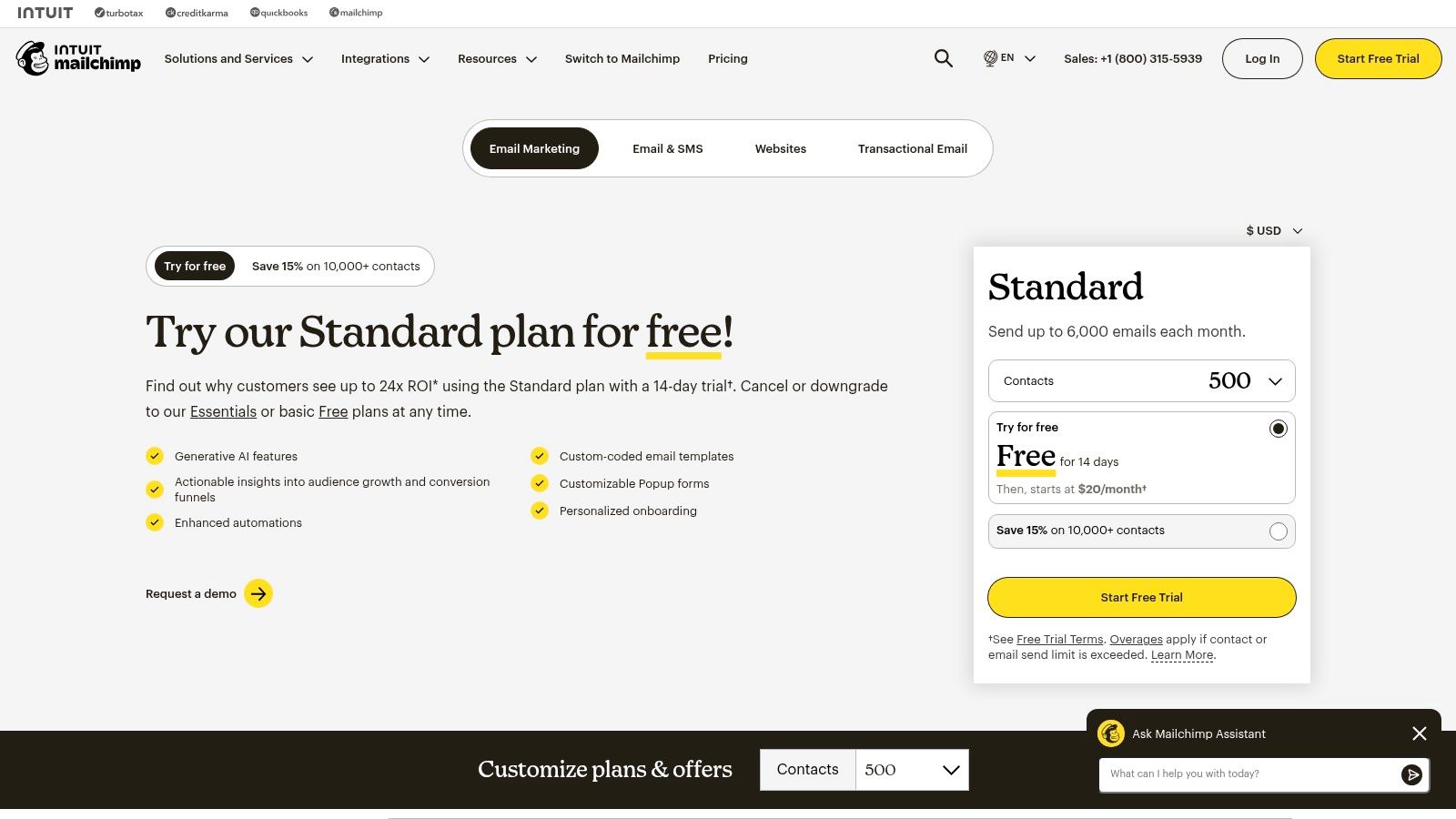
What sets Mailchimp apart is its robust ecosystem. Beyond standard email campaigns, it offers customer journey automation, send-time optimization, and recently integrated AI tools to help with content generation and performance insights. Its extensive integrations with platforms like Shopify, WooCommerce, and Meta make it a powerful hub for unified marketing efforts. For a deeper look at extending its capabilities, you can explore comprehensive guides on Mailchimp integrations.
Pricing and Key Considerations
Best For: Solo marketers, SMBs, and ecommerce businesses needing a user-friendly, all-in-one platform.
Mailchimp’s pricing is tiered, starting with a free plan that’s suitable for new businesses building their initial list. Paid plans scale based on the number of contacts and email sends.
- Pros: Very approachable for beginners, huge library of integrations and learning resources, and offers a Pay-As-You-Go credit option for infrequent senders.
- Cons: Costs can escalate quickly as your contact list grows, and many of the more advanced automation and analytics features are reserved for higher-priced tiers.
OKZest Compatibility: Mailchimp fully supports merge tags for dynamic image personalization and can be integrated via its robust API, making it a great choice for creating highly personalized visual campaigns.
Website: mailchimp.com
2. Klaviyo
Klaviyo has cemented its position as the powerhouse of email marketing software for ecommerce, particularly for direct-to-consumer (DTC) brands. Its core strength lies in its deep, native integrations with platforms like Shopify and BigCommerce, allowing it to pull in rich customer data for hyper-targeted segmentation and revenue attribution. This focus on data makes it an indispensable tool for brands aiming to build automated customer lifecycle journeys, from abandoned cart flows to post-purchase upsells.
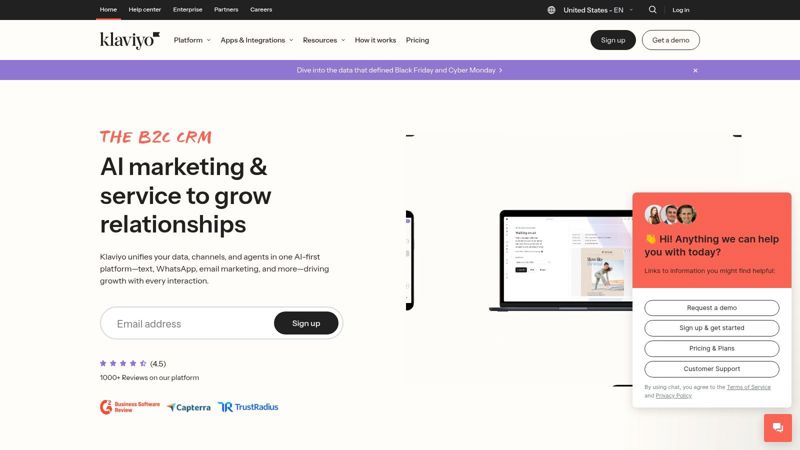
What truly sets Klaviyo apart is its unified email and SMS orchestration, allowing marketers to create cohesive cross-channel campaigns. The platform offers advanced features like predictive analytics, pre-built automation templates based on proven ecommerce strategies, and robust A/B testing capabilities. Its data-centric approach empowers businesses to move beyond simple newsletters and implement sophisticated strategies. For businesses serious about leveraging customer data, you can dive deeper into effective strategies with guides on email marketing personalisation.
Pricing and Key Considerations
Best For: Ecommerce businesses, especially DTC brands on Shopify or BigCommerce, that require deep data integration and advanced automation.
Klaviyo’s pricing is based on the number of contacts and email/SMS sends. A limited free tier is available for businesses just starting out, but it includes Klaviyo branding.
- Pros: Powerful ecommerce data model and lifecycle templates, excellent segmentation capabilities, and scales well for growing online stores.
- Cons: Pricing can increase significantly with list growth and SMS usage, and the platform has a steeper learning curve compared to more general-purpose tools.
OKZest Compatibility: Klaviyo fully supports merge tags, making it ideal for incorporating dynamic, personalized images. Integration via its API allows for advanced, data-driven visual campaigns.
Website: klaviyo.com
3. Constant Contact
Constant Contact is a veteran in the email marketing software space, building a strong reputation among small businesses, nonprofits, and event organizers. Its platform is designed for ease of use, focusing on helping users quickly create professional campaigns, grow their contact lists, and engage their audience without a steep learning curve. The drag-and-drop editor is intuitive, and features like the BrandKit help maintain visual consistency by automatically applying your logo, colors, and fonts to templates.
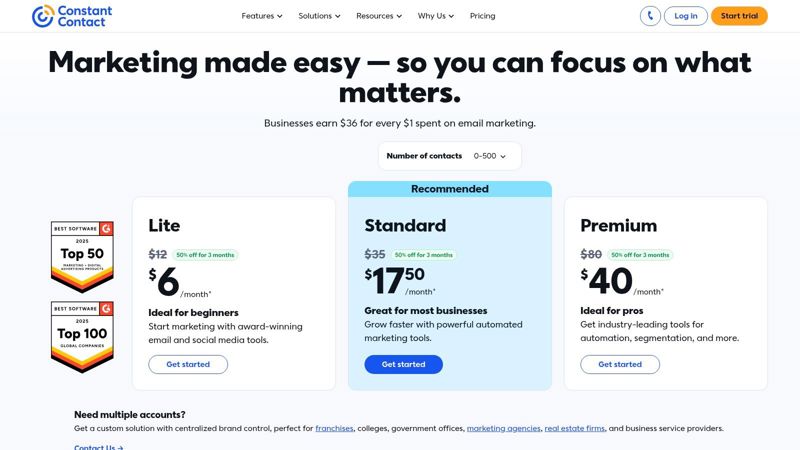
What differentiates Constant Contact is its focus on all-around digital marketing tools that extend beyond the inbox. The platform natively integrates features for event management, surveys, and social media posting, making it a solid choice for organizations that manage multiple marketing channels. This bundled approach, combined with its highly-regarded live phone and chat support, provides a supportive ecosystem for users who may not have dedicated marketing teams.
Pricing and Key Considerations
Best For: Small businesses, nonprofits, and event-based organizations looking for a straightforward platform with strong support.
Constant Contact’s pricing is based on the number of contacts in your list, with tiers that unlock more advanced features. They offer a trial period to test the platform.
- Pros: Friendly onboarding and excellent U.S.-focused support, generous monthly send limits relative to list size, and special discounts are available for nonprofits.
- Cons: Some advanced automation and detailed reporting are locked behind higher-priced tiers, and add-ons like inbox preview tools can increase the overall cost.
OKZest Compatibility: Constant Contact supports personalization tags that can be used for dynamic image URLs, allowing for full integration with OKZest to deliver personalized visuals to every subscriber.
Website: www.constantcontact.com/pricing
4. HubSpot Marketing Hub (Email Marketing)
HubSpot Marketing Hub is more than just email marketing software; it’s a fully integrated marketing platform powered by a robust CRM. This native connection allows for deeply personalized campaigns based on a complete view of each contact's lifecycle, from their first website visit to their most recent support ticket. For businesses looking to align marketing, sales, and service efforts, HubSpot provides a unified source of truth, enabling sophisticated segmentation and automation.
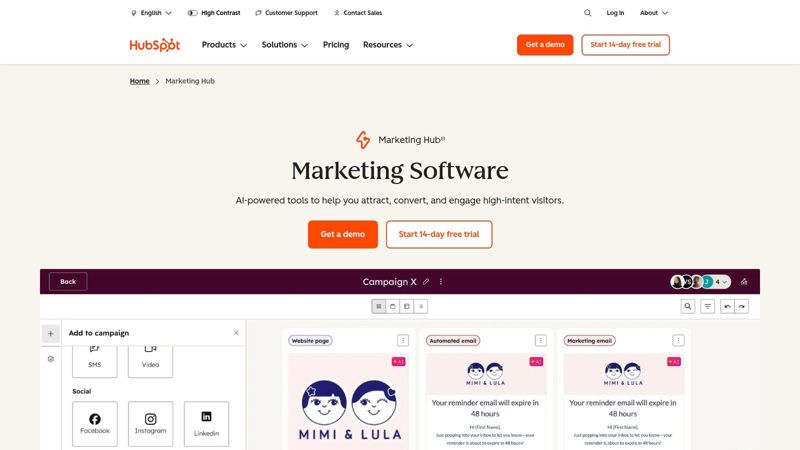
What truly sets HubSpot apart is its ability to tie email performance directly to business revenue through advanced attribution reporting. Its powerful workflow builder goes beyond simple autoresponders, allowing you to create complex customer journeys that adapt to user behavior in real-time. To better understand the core concepts behind these powerful features, you can get a detailed overview of what marketing automation is and how it drives growth. The platform also includes AI tools for creating and optimizing email content.
Pricing and Key Considerations
Best For: B2B companies and scaling businesses that need a single, powerful platform for marketing, sales, and service.
HubSpot offers a suite of free tools, including basic email marketing. Paid Marketing Hub plans scale with features and the number of marketing contacts you have.
- Pros: All-in-one platform provides a single customer record across departments, and offers powerful reporting and scalability for growing teams.
- Cons: Can become expensive as your contact list and team size grow, with many advanced automation and analytics features locked in higher-priced Professional and Enterprise tiers.
OKZest Compatibility: HubSpot's custom properties and personalization tokens are fully compatible with dynamic image merge tags, and its API allows for seamless integration to enhance email personalization at scale.
Website: hubspot.com/products/marketing
5. Brevo (formerly Sendinblue)
Brevo, formerly known as Sendinblue, has carved out a unique position in the email marketing software landscape by offering a comprehensive sales and marketing toolkit that extends well beyond email. Its primary differentiator is a pricing model that focuses more on email volume rather than being strictly limited by contact list size, making it an attractive and cost-effective solution for businesses that send frequent campaigns to a targeted audience. This platform combines email, SMS marketing, chat, and a CRM into one unified dashboard.
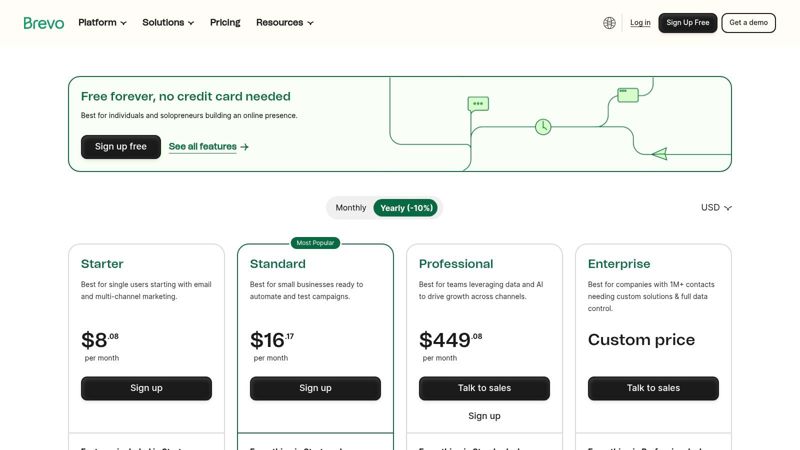
What makes Brevo stand out is its all-in-one approach at an accessible price point. Users can manage marketing automation workflows, create landing pages, run Facebook ads, and engage with customers via live chat without needing multiple subscriptions. This consolidation is particularly beneficial for small and midsize teams looking to streamline their marketing stack and manage customer interactions from a single hub. The platform’s marketing automation builder is powerful, allowing for complex, trigger-based workflows that can nurture leads across different channels.
Pricing and Key Considerations
Best For: SMBs, startups, and marketers who need an affordable, multi-channel platform with a generous free plan.
Brevo’s pricing begins with a free tier that includes up to 300 emails per day and unlimited contacts, which is excellent for testing. Paid plans scale based on email volume and feature access.
- Pros: Very competitive pricing structure based on email sends, includes multi-channel tools (SMS, chat), and offers a robust free plan.
- Cons: The user interface can be less intuitive than some competitors, and contact storage can be limited on lower-tier paid plans.
OKZest Compatibility: Brevo supports personalization tags (merge tags) that can be used to insert dynamic, personalized images from OKZest directly into your email campaigns. Integration is straightforward for creating visually engaging and customized content.
Website: brevo.com
6. Campaign Monitor
Campaign Monitor carves out a niche in the email marketing software landscape by focusing intensely on design quality and brand consistency. It’s an ideal choice for businesses where aesthetics are paramount, offering a clean, powerful editor and a suite of designer-friendly templates that can be locked down to ensure team members adhere to brand guidelines. This focus on polish and professionalism makes it a favorite among agencies and design-led companies.

What makes Campaign Monitor stand out is its commitment to both usability and control. The platform provides intuitive automation journeys and send-time optimization to maximize engagement, while also offering granular control over template sections. This combination allows marketing teams to create sophisticated, on-brand campaigns efficiently. Its excellent deliverability and priority support tiers further cement its reputation as a reliable and professional-grade tool.
Pricing and Key Considerations
Best For: Agencies, design-focused businesses, and anyone needing tight control over brand consistency in emails.
Campaign Monitor's pricing is structured across three main tiers: Basic, Unlimited, and Premier, scaling with your contact list size. A notable advantage is its flexible Pay-As-You-Go credit system, perfect for organizations that send emails infrequently.
- Pros: Exceptional email editor with powerful template controls (like section locking), flexible billing that includes a pay-per-campaign option, and strong customer support.
- Cons: Lacks the extensive built-in channels (like social media or SMS) found in more all-in-one marketing suites, and accessing advanced automation features requires a higher-tier plan.
OKZest Compatibility: Campaign Monitor's merge tags are fully compatible with dynamic image personalization, and its API allows for seamless integration to create visually rich and engaging email experiences.
Website: campaignmonitor.com
7. ActiveCampaign
ActiveCampaign positions itself as a customer experience automation platform, going far beyond typical email marketing software. It excels in providing sophisticated automation and a built-in CRM, making it a favorite for growth-focused SMBs that need powerful, data-driven workflows. Its visual automation builder is one of the most robust on the market, allowing for complex, conditional logic that can personalize a customer's journey with incredible detail.
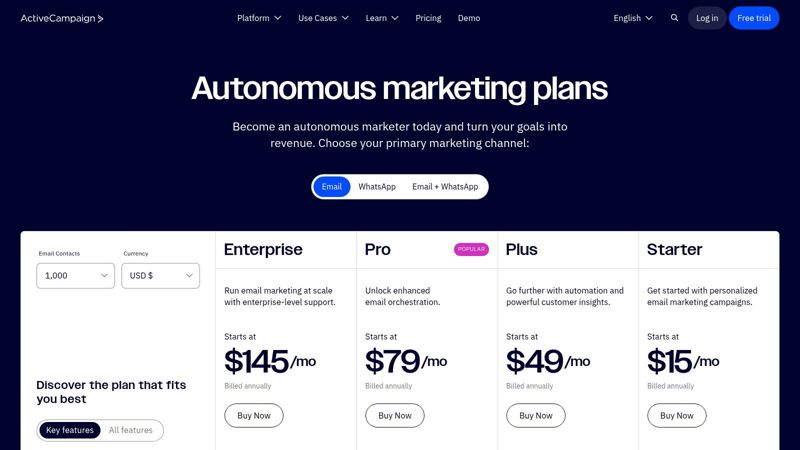
What truly sets ActiveCampaign apart is the seamless integration of its marketing automation with a sales CRM. Features like lead scoring, predictive sending, and split automations enable businesses to align their sales and marketing efforts effectively. Native integrations with major ecommerce platforms like Shopify and WooCommerce allow for deep data syncing, triggering automations based on purchase behavior, abandoned carts, and other key customer actions.
Pricing and Key Considerations
Best For: B2B businesses, ecommerce stores, and agencies that require advanced automation and integrated sales CRM functionality.
ActiveCampaign’s pricing is based on the number of contacts and the feature set included in each plan (Marketing, Sales, or a combined Bundle). There is no free plan, but they offer a free trial.
- Pros: Extremely powerful automation capabilities at competitive price points, excellent alignment between email, ecommerce, and CRM features, and strong segmentation options.
- Cons: The platform has a steeper learning curve for its more complex automation features, and some advanced functionalities are reserved for higher-tier Pro or Enterprise plans.
OKZest Compatibility: ActiveCampaign fully supports personalization tags (merge tags) for dynamic image customization. Integration is straightforward via its API, enabling highly personalized visual content within automated workflows.
Website: activecampaign.com
8. Kit (formerly ConvertKit)
Kit, which many will recognize by its former name ConvertKit, is a powerful email marketing software built specifically for the creator economy. It excels at helping bloggers, artists, podcasters, and coaches grow and monetize their audience. Rather than focusing on corporate-level features, Kit provides a streamlined experience centered around building a direct relationship with subscribers through newsletters, automated sequences, and integrated digital product sales.
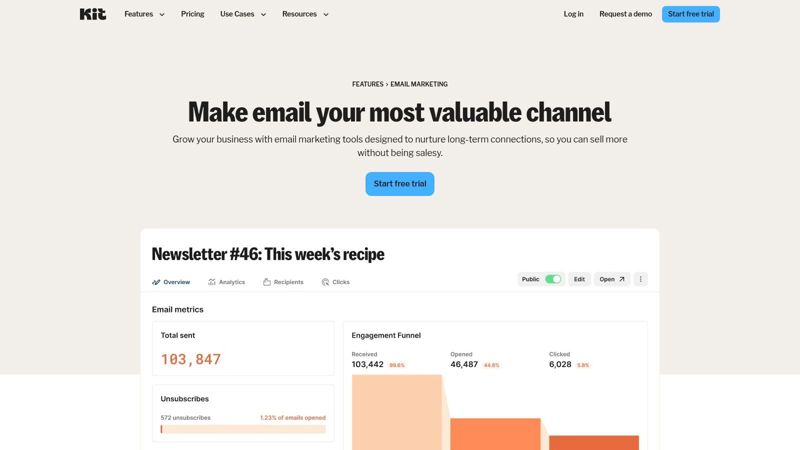
What makes Kit stand out is its deep understanding of the creator workflow. It offers simple yet effective visual automations, integrated commerce for selling digital products or subscriptions directly, and a Creator Network to help users grow their lists through cross-promotion. This focus on monetization and community makes it more than just an email tool; it’s an audience-building and revenue-generating platform designed for independent professionals.
Pricing and Key Considerations
Best For: Content creators, newsletter writers, coaches, and anyone selling digital products directly to their audience.
Kit offers a free plan for up to 1,000 subscribers with limited features. Paid plans unlock automations, integrations, and advanced functionality, scaling with your subscriber count.
- Pros: Extremely friendly for solo creators and small teams, built-in monetization and referral features are a huge plus, and its focus on the creator economy is clear and well-executed.
- Cons: Recent price increases have made it more expensive, advanced reporting is gated to the Pro plan, and it has fewer native CRM features compared to enterprise-focused suites.
OKZest Compatibility: Kit supports merge tags (called Liquid tags) for powerful personalization, allowing seamless integration of dynamic, personalized images into your email funnels.
Website: kit.com/features/email-marketing
9. MailerLite
MailerLite has carved out a strong reputation as one of the most affordable and accessible email marketing software solutions on the market. It excels by offering a clean, intuitive interface and a surprisingly robust feature set that goes beyond basic email campaigns. This makes it an ideal choice for creators, freelancers, and small businesses who need more than just an email tool, offering features like a drag-and-drop website builder, landing pages, and the ability to sell digital products directly.

What truly sets MailerLite apart is its commitment to providing high-value features like automation, segmentation, and A/B testing, even on its lower-cost plans. The platform focuses on simplicity and effectiveness, ensuring that users can build sophisticated campaigns without a steep learning curve. Its straightforward approach allows you to manage subscribers, build workflows, and analyze results efficiently, making it a powerful engine for growth.
Pricing and Key Considerations
Best For: Bloggers, creators, startups, and small businesses looking for an all-in-one marketing platform on a budget.
MailerLite’s pricing is famously competitive, with a generous free plan for up to 1,000 subscribers and paid plans that offer excellent value as your list grows.
- Pros: Extremely cost-effective with a strong feature set, very easy-to-use interface, and includes website/landing page builders in its core offering.
- Cons: Some advanced enterprise-grade features and high-volume sending capabilities may require add-ons or custom plans, and the free plan has MailerLite branding.
OKZest Compatibility: MailerLite supports custom fields and merge tags, making it fully compatible with dynamic image personalization. Integration is straightforward via its API for more advanced, automated visual campaigns.
Website: www.mailerlite.com/pricing
10. GetResponse
GetResponse positions itself as more than just email marketing software; it's an inbound marketing solution designed to handle the entire customer lifecycle. It bundles a powerful email platform with a suite of conversion-focused tools, making it a strong contender for businesses that want to manage funnels, landing pages, webinars, and email campaigns from a single dashboard. This all-in-one approach simplifies the tech stack, which is a major draw for marketers aiming to streamline their operations.
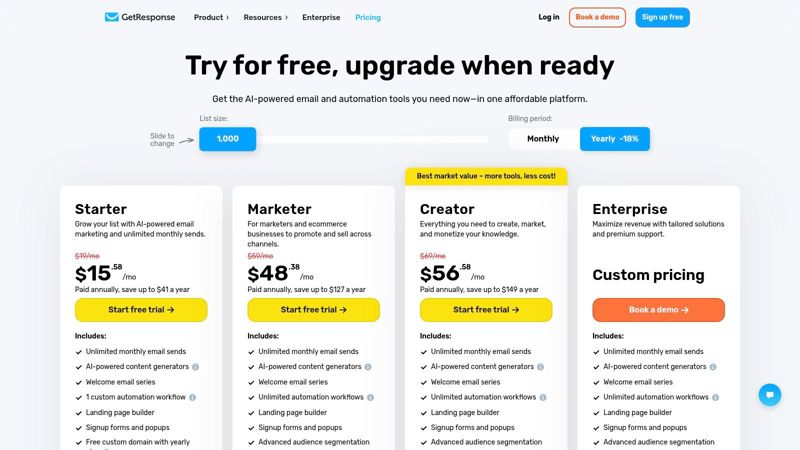
What makes GetResponse unique is its integration of features that often require separate subscriptions elsewhere. You can build an automated sales funnel, host a live webinar to capture leads, and then nurture them through sophisticated email workflows without ever leaving the platform. Its recent addition of AI tools for content generation and ecommerce-specific features for segmentation and abandoned cart recovery further solidifies its value for online sellers and course creators.
Pricing and Key Considerations
Best For: Marketers, entrepreneurs, and course creators who need an integrated solution for email marketing, lead generation, and conversion funnels.
GetResponse offers a free-forever plan for up to 500 contacts, with paid plans scaling based on list size and feature access. Notably, all paid tiers include unlimited monthly email sends.
- Pros: Extensive feature set beyond email (webinars, funnels, landing pages), generous unlimited sending on paid plans, and frequent promotional discounts.
- Cons: The platform can feel overbuilt and complex if you only need basic email marketing, and the cost increases significantly with your list size.
OKZest Compatibility: GetResponse supports merge tags, allowing for easy integration of dynamic personalized images. Its API and automation capabilities also provide a solid foundation for advanced visual marketing campaigns.
Website: getresponse.com
11. Omnisend
Omnisend carves out a powerful niche as an email marketing software built from the ground up for ecommerce businesses. It goes beyond standard email campaigns by integrating SMS and web push notifications into a single, unified workflow, allowing online stores to create cohesive, multi-channel customer journeys. Its strength lies in deep integrations with platforms like Shopify, BigCommerce, and WooCommerce, enabling highly targeted automations based on real-time shopping behavior.
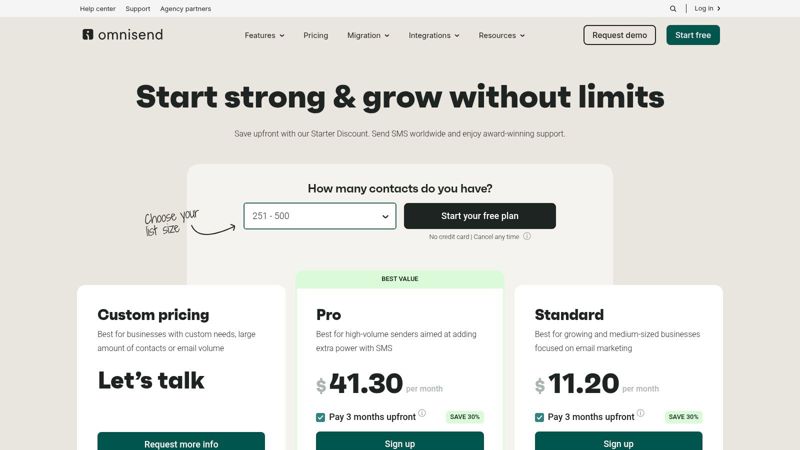
What truly sets Omnisend apart are its ecommerce-centric features. Pre-built automation templates for abandoned carts, welcome series, and browse abandonment are incredibly effective and easy to launch. The platform also offers unique tools like a product picker that pulls items directly from your store into emails, and advanced reporting that ties campaign performance directly to sales revenue. This focus makes it a go-to solution for merchants wanting to drive repeat purchases and increase customer lifetime value.
Pricing and Key Considerations
Best For: Ecommerce brands of all sizes, especially those on Shopify or BigCommerce, looking for a powerful multi-channel marketing automation tool.
Omnisend offers a free plan perfect for new stores to test its core features. Paid plans scale based on contact list size and offer increasing levels of support and advanced features. SMS credits are billed separately.
- Pros: Excellent value for ecommerce-focused features, strong multi-channel automation (email, SMS, push), and 24/7 live chat support on all plans.
- Cons: The user interface can feel dense for beginners not accustomed to ecommerce platforms, and SMS pricing varies by country.
OKZest Compatibility: Omnisend supports dynamic content and merge tags, making it fully compatible with personalized image campaigns. Integration is possible via its API for more advanced, custom workflows.
Website: omnisend.com
12. Capterra — Email Marketing Software Category
Instead of a single platform, Capterra offers a comprehensive marketplace to discover, compare, and shortlist the best email marketing software for your specific needs. As a Gartner-owned directory, it provides a credible, high-level overview of the entire landscape, backed by verified user reviews. This makes it an invaluable starting point for anyone feeling overwhelmed by the sheer number of options available.
What makes Capterra so effective is its powerful filtering system and side-by-side comparison tools. You can narrow down choices based on business size, pricing models, and must-have features like automation or analytics. Its regularly updated shortlist reports and category rankings give you a clear picture of market leaders and rising stars, helping you build a confident list of vendors to evaluate further.
Pricing and Key Considerations
Best For: Businesses of all sizes at the beginning of their research process, looking for an unbiased way to compare multiple vendors.
Capterra itself is free to use for buyers. The pricing information displayed for each software is a snapshot provided by the vendor and should always be verified on the official website.
- Pros: Extensive coverage of both mainstream and niche tools, verified user reviews provide real-world insights, and powerful filters to quickly narrow your search.
- Cons: Sponsored listings can influence the initial order of vendors, and pricing information can sometimes be outdated, requiring you to visit the vendor’s site for confirmation.
OKZest Compatibility: While Capterra is a directory, not a sending platform, you can use it to find tools that are compatible with OKZest. Look for software that supports merge tags for dynamic images and offers robust API access for integration.
Website: capterra.com/email-marketing-software/
Top 12 Email Marketing Tools: Feature & Pricing Comparison
| Product | Core features ✨ | UX / Quality ★ | Value / Pricing 💰 | Best for 👥 | Standout / USP 🏆 |
|---|---|---|---|---|---|
| Mailchimp | Templates, drag‑drop, automation, ecommerce & AI | ★★★★ | 💰 Scales with contacts (can get costly) | 👥 SMBs, beginners, growing teams | 🏆 Broad ecosystem & onboarding |
| Klaviyo | Deep Shopify/BigCommerce, segmentation, SMS, attribution | ★★★★ | 💰 Premium as lists/SMS grow | 👥 DTC ecommerce brands | 🏆 Revenue attribution & personalization |
| Constant Contact | Drag‑drop, BrandKit, events, 300+ integrations | ★★★★ | 💰 Good for SMBs; nonprofit discounts | 👥 Small businesses & nonprofits | 🏆 U.S.‑focused support & events |
| HubSpot Marketing Hub | CRM‑driven personalization, journeys, advanced reporting | ★★★★★ | 💰 Enterprise‑priced (seats & contacts) | 👥 Teams, enterprises, lifecycle marketers | 🏆 Single customer record across teams |
| Brevo (Sendinblue) | Send‑based plans, multichannel (SMS/WhatsApp), automation | ★★★★ | 💰 Competitive for send‑heavy use | 👥 Small → midsize teams with high sends | 🏆 Send‑based pricing model |
| Campaign Monitor | Designer templates, editor, pay‑per‑campaign, automation | ★★★★ | 💰 Flexible billing (campaign or plan) | 👥 Designers, agencies, marketers | 🏆 Design control & deliverability focus |
| ActiveCampaign | Advanced automation, predictive sending, built‑in CRM | ★★★★★ | 💰 Strong automation value; tiered pricing | 👥 Growth‑focused SMBs & sales teams | 🏆 Automation‑first workflows |
| Kit (ConvertKit) | Visual automations, creator commerce, referral tools | ★★★★ | 💰 Creator‑oriented (recent increases) | 👥 Creators, newsletters, small teams | 🏆 Built‑in monetization for creators |
| MailerLite | Drag‑drop, landing pages, digital sales, multivariate tests | ★★★★ | 💰 Very affordable, generous plans | 👥 Startups, small businesses | 🏆 Simplicity + strong value |
| GetResponse | Funnels, webinars, unlimited sends (paid), automation | ★★★ | 💰 Good bundle value; promotions often | 👥 Marketers needing funnels & webinars | 🏆 All‑in‑one conversion toolkit |
| Omnisend | Email+SMS+web push, ecommerce automations, product feeds | ★★★★ | 💰 Good ecommerce value; SMS billed separately | 👥 Online stores & transactional flows | 🏆 Ecommerce automation & cart flows |
| Capterra (category) | Category rankings, verified reviews, side‑by‑side filters | ★★★★ | 💰 Free to use (sponsored listings exist) | 👥 Buyers researching vendors | 🏆 Comprehensive comparisons & reviews |
Final Thoughts
Navigating the crowded landscape of email marketing software can feel overwhelming. We've explored a wide array of platforms, from the user-friendly interface of Mailchimp to the powerful automation engine of ActiveCampaign, the e-commerce specialization of Klaviyo, and the all-in-one approach of HubSpot. Each tool presents a unique combination of features, pricing structures, and ideal use cases, underscoring a critical truth: there is no single "best" platform for everyone.
The right choice hinges entirely on your specific context. A solo consultant might find MailerLite's generous free plan and intuitive builder perfectly sufficient, while a rapidly scaling e-commerce brand would benefit immensely from Omnisend's or Klaviyo's deep data integrations and revenue-focused automation. Similarly, an enterprise-level sales team needs the robust CRM and lead scoring capabilities inherent in a platform like HubSpot, a level of complexity that would be unnecessary for a small local business using Constant Contact for its community newsletter.
How to Make Your Final Decision
As you weigh your options, move beyond surface-level feature comparisons. The most effective way to select your ideal email marketing software is to ground your decision in your operational realities and strategic goals.
Key questions to ask before you commit:
- What is my primary goal? Are you focused on lead nurturing, direct sales, content distribution, or transactional updates? Your primary objective will dictate which features are non-negotiable. For example, a coach focused on lead nurturing needs sophisticated automation, while an e-commerce store needs abandoned cart functionality.
- What is my team's technical skill level? Be honest about your team's capacity. A platform like ActiveCampaign offers immense power but comes with a steeper learning curve. In contrast, tools like Mailchimp and Campaign Monitor prioritize ease of use, allowing less technical users to get up and running quickly.
- How will this tool scale with my business? Consider your one-year and three-year growth plans. The software that works for you today with 1,000 subscribers might become restrictive or prohibitively expensive at 50,000. Look for platforms with clear, predictable pricing tiers and the advanced features you'll need tomorrow.
- What does my existing tech stack look like? Your email platform doesn't operate in a vacuum. Ensure it integrates seamlessly with your CRM, e-commerce platform, landing page builder, and other essential tools. Check for native integrations and robust API support, especially for custom solutions.
Implementation and Beyond
Once you've made your choice, the work has just begun. Proper implementation is crucial for success. Start by migrating your contact list cleanly, ensuring you segment your audience from day one. Take the time to set up essential automated workflows, such as welcome series for new subscribers and re-engagement campaigns for inactive contacts.
Remember that the ultimate success of your email marketing efforts isn't determined by the software itself, but by the strategy behind it. The most powerful email marketing software in the world can't salvage a poor content strategy or an unsegmented list. Use the features at your disposal to test, learn, and iterate. Pay close attention to your deliverability rates, open rates, and click-through rates, and use that data to continuously refine your approach. The journey to mastering email marketing is one of constant optimization, and choosing the right tool is simply the first, most important step.
Now that you've chosen the perfect email marketing software, it's time to supercharge your campaigns with dynamic, personalized images. OKZest allows you to embed real-time, personalized images directly into your emails using simple merge tags, boosting engagement and click-through rates. See how easy it is to make every email feel unique by visiting OKZest today.