What exactly is zero-party data? It’s the information customers choose to share with you. Think preferences, what they’re planning to buy, or personal details they offer up to help you create a better experience for them. It’s data that’s given, not taken.
The Shift from Guesswork to Genuine Connection
Imagine a detective trying to solve a case armed only with a few muddy footprints. For years, that's how marketers operated, using third-party cookies and tracking to piece together clues and guess what customers wanted.
That whole era of guesswork is quickly coming to an end. It's being pushed out by a perfect storm of privacy laws like GDPR, major tech changes from Apple and Google, and a simple fact: people are tired of being tracked and want more transparency.
This new reality is a huge challenge. The old playbook is obsolete, and many marketers are left wondering how to understand their audience now. In a world where trust is everything, how do you connect with customers who are rightly skeptical about how their data is being used?
Moving from Spying to Conversation
The answer is surprisingly simple: stop spying and start a conversation. Instead of trying to follow a customer's digital shadow across the web, you can just ask them what they're looking for. This is the heart of zero-party data. It’s the information your customers hand over because they trust it’ll lead to something better for them.
Zero-party data is information that a customer proactively and voluntarily shares with a brand. This can include preference center data, purchase intentions, personal context, and how the individual wants to be recognized by the brand.
This type of data is the new gold standard for one simple reason: it cuts out all the inference. You no longer have to assume a customer who bought hiking boots is an outdoor fanatic—they can tell you that themselves in a quick survey or by updating their preferences.
Building Relationships on Trust
This approach completely changes the dynamic between a brand and its audience. It reframes data collection from a sneaky, behind-the-scenes operation into a straightforward value exchange. Customers know what they’re giving you and what they’re getting in return.
Here’s why that matters so much:
- Explicit Consent: The data is given with full awareness, which is non-negotiable for compliance and building real trust.
- Pinpoint Accuracy: It comes straight from the source. It’s the most accurate, reliable data you can possibly get.
- Deeper Insights: It uncovers what customers actually want and why—the kind of stuff behavioral data can only ever hint at.
When you embrace zero-party data, you stop being just another company selling a product. You become a partner in your customer's journey. It’s not just a buzzword; it’s the foundation for building real, lasting relationships based on mutual respect. This shift from guessing to asking is how you win in a privacy-first world.
Navigating the Four Tiers of Customer Data
To really get why zero-party data is such a big deal, you have to understand where it fits in the wider world of customer information. Let’s be honest, not all data is created equal. Each type has a very different job to do.
Think of it like being a personal shopper. Your success depends entirely on the quality of the information you have about your client.
You could start by buying a generic list of "people who like shoes." That's third-party data. It's scooped up from all over, packaged by data brokers, and usually pretty vague. It’s a shot in the dark, and with privacy laws getting stricter and third-party cookies disappearing, it's becoming a less reliable bet.
A slightly better move? Getting a customer list from a partner store that sells handbags. This is second-party data. You're essentially borrowing another company's first-party data. It's more relevant, for sure, but it still only gives you a piece of the puzzle.
Then there's the info you gather yourself. You can see which shoes a customer clicks on your website or what they've bought in the past. This is first-party data. It’s gold because it’s based on actual interactions with your brand, giving you solid clues about what they're interested in.
But the most powerful method of all? Just asking. "What style are you looking for? What's your size, and what's the occasion?" This direct, honest conversation is the heart of zero-party data.
A Clear Comparison of Data Types
The real difference between these data types boils down to where they come from, how accurate they are, and how much consent is involved. When you see them side-by-side, it becomes obvious why simply asking is so much more powerful than trying to guess.
This shift in thinking is moving marketing away from guesswork and toward building genuine connections with customers.
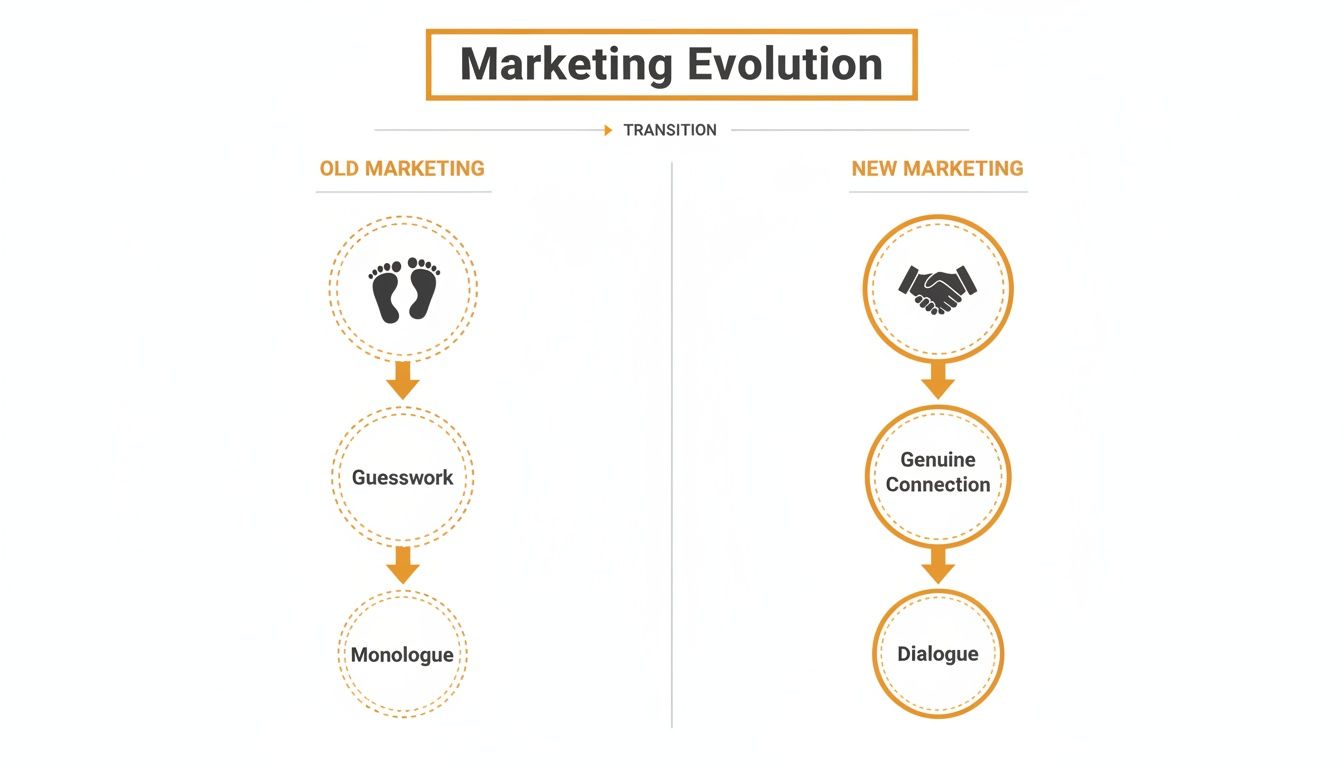
The image above shows it perfectly. Brands are finally moving away from just tracking digital footprints and are instead starting real dialogues—which is exactly what a zero-party data strategy is all about.
"Zero-party data is information that a customer intentionally and proactively shares with a brand. It can include purchase intentions, personal context, and how the individual wants to be recognized by the brand."
This direct line of communication cuts through all the noise. The term zero-party data was coined by Forrester Research, marking a pivotal moment as privacy became a top concern for everyone.
Unlike first-party data, which guesses preferences based on behavior, zero-party data is what customers choose to share. In fact, Forrester's research found that brands using it see a 2.9x increase in customer lifetime value because it removes the guesswork.
Why the Distinction Matters
Getting a handle on these data tiers is essential for building a modern, privacy-first marketing plan. Our own guide on data-driven marketing dives deeper into turning these insights into real results.
To make it even clearer, this table breaks down the key differences, showing why zero-party data is the most trustworthy source for genuine personalization.
Zero vs First vs Second vs Third Party Data Comparison
| Data Type | Source | How It Is Collected | Consent Level | Key Advantage |
|---|---|---|---|---|
| Zero-Party | Directly from the customer | Proactively shared via quizzes, surveys, preference centers | Explicit & Intentional | Unmatched accuracy and insight into customer intent and preferences |
| First-Party | Your own channels | Observed behavior (website clicks, purchase history, app usage) | Implicit | High relevance and reliability based on direct brand interactions |
| Second-Party | A trusted partner | Shared or purchased from another company's first-party data set | Indirect | Expands audience reach with data from a relevant, known source |
| Third-Party | Data aggregators | Purchased from large data brokers who compile it from many sources | None or Vague | Provides massive scale and broad audience segmentation |
In the end, while every type of data can have a purpose, only zero-party data is built completely on a foundation of trust and consent. It’s not about what you can figure out about your customers; it’s about what they are willing to tell you. This simple shift empowers you to build real relationships that drive loyalty and growth for the long haul.
Why Zero-Party Data Is a Strategic Game-Changer
Knowing the difference between data types is one thing, but seeing the real-world business results is what makes zero-party data so powerful. It’s not just another buzzword; it’s a strategic asset that fundamentally changes how you connect with your customers and, ultimately, impacts your bottom line.
At its heart, zero-party data is the fuel for a smarter, more effective personalization engine. When customers explicitly tell you they prefer casual wear over formal attire, or that their budget for a new laptop is under $800, you cut through the noise. You’re no longer guessing what they want.
This clarity allows you to deliver recommendations and content that instantly resonate. Instead of sending a generic promotional email, an e-commerce brand can showcase the exact product category a user just said they were interested in. This level of relevance makes customers feel seen and understood, which is why a whopping 48% of consumers are happy to share their data when it leads to a better experience.
Build Genuine Customer Trust and Loyalty
In an age where data skepticism is at an all-time high, trust has become the ultimate currency. Every headline about a data breach makes consumers more protective of their personal information. Zero-party data offers a refreshing alternative by operating on a foundation of complete transparency and consent.
When you ask for information directly—and explain how you’ll use it to make their experience better—you shift the dynamic. Data collection stops being a covert activity and becomes a collaborative partnership. This simple act builds incredible goodwill and shows you respect their privacy.
By building a data strategy on voluntary, explicit consent, you’re not just gathering insights. You’re building a loyal community that trusts your brand to act in their best interest. This trust is the bedrock of long-term customer retention.
This creates a positive feedback loop. The more a customer trusts you, the more willing they are to share valuable insights. The more insights they share, the better you can personalize their experience, which only strengthens their loyalty to your brand.
Turn Privacy Compliance into a Competitive Edge
For many businesses, navigating the maze of privacy regulations feels like a constant headache. A zero-party data strategy, however, flips the script. It turns compliance from a defensive chore into a proactive competitive advantage.
Because this data is collected with explicit user consent, it’s inherently aligned with the core principles of privacy laws like GDPR and CCPA. You can build robust, personalized marketing campaigns without the constant fear of crossing regulatory lines.
While your competitors are scrambling to figure out a world without third-party cookies, your strategy is already future-proof. It’s built on a sustainable and ethical foundation.
Ultimately, brands that get this right don't just follow the rules—they win over customers. They prove that respecting privacy and delivering amazing, personalized experiences can and should go hand-in-hand. This commitment becomes a powerful differentiator that attracts and keeps high-value customers who actively want to engage with brands that put them first.
How to Collect Zero-Party Data Ethically and Effectively
Knowing the value of zero-party data is one thing; actually getting it is another. The key isn't just what you ask, but how you ask. It all boils down to a simple but powerful idea: the value exchange. People will gladly share information if they feel they're getting something worthwhile in return.
This turns data collection from a one-sided demand into a genuine conversation. You’re not just taking; you're offering an immediate benefit, whether that’s a personalized recommendation, a special discount, or just a better, more relevant experience on your site. The goal is to make the whole process transparent, helpful, and maybe even a little fun.
<img src="https://okzest.blob.core.windows.net/blog/a-person-holds-a-smartphone-displaying-a-what-style-do-you-prefer-survey-with-circular-options-on-a-white-desk.jpg" alt="A person holds a smartphone displaying a "What style do you prefer?" survey with circular options on a white desk." width="800">
Interactive Quizzes and Guided Selling
One of the best ways to collect zero-party data is with interactive quizzes. Instead of a boring form, a quiz feels like a fun, personal journey. Imagine a skincare brand running a "Find Your Perfect Routine" quiz that asks about skin type, concerns, and lifestyle.
The real magic happens at the end. The customer gets a tailored product recommendation—that’s their value—and the brand gets precise data on that person's needs. This turns a standard marketing moment into a helpful consultation.
User-Friendly Preference Centers
A preference center is a dedicated spot where customers can tell you what they want to hear about and how often. It's a huge trust-builder because it puts them squarely in the driver's seat.
A great preference center is more than just an unsubscribe page. It's a dialogue where customers can specify their interests (like "men's shoes" or "women's apparel"), how often they want emails, and on which channels. This proactive approach not only respects their choices but also hands you invaluable data for segmentation.
To make them work, keep them simple, easy to find, and clearly explain the benefits. A simple prompt like, "Tell us your preferences to get more relevant content and exclusive offers," can make a big difference in participation. You can get more practical tips from our guide on audience segmentation.
Engaging Surveys and Polls
Surveys and polls are classic for a reason, but their effectiveness is all in the execution. Long, tedious questionnaires are a guaranteed way to be ignored. Instead, think short, single-question polls or micro-surveys that are quick to answer.
Embed them right on your website, in your app, or in an email to capture feedback in the moment. An e-commerce site could use a pop-up poll asking, "What are you shopping for today?" with a few multiple-choice answers. This gives you instant insight into what a user wants without getting in their way.
Smart Onboarding and Registration Forms
The sign-up process is a golden opportunity to collect foundational zero-party data. But asking for too much info upfront can scare people away. The answer is progressive profiling.
Start by asking for the bare minimum—usually just a name and email. Then, over time and across different interactions, you can ask for a little more.
Here’s how it could work:
- Initial Sign-up: Collect only the essentials.
- Second Interaction: When they log in again, ask for their main interest or what they're hoping to achieve.
- Later On: Prompt them to complete their profile for a small reward, like early access to a sale.
This approach respects the customer's time and builds their profile naturally. Brands using these value-driven methods are seeing impressive results, with zero-party data collection rates averaging 25-35%. This easily outpaces the declining reliability of third-party data and provides the kind of accurate insights needed for sharp, effective marketing.
Activating Your Data with Dynamic Personalized Images
Collecting zero-party data is just the first step. The real magic happens when you activate it. This is where you turn raw information into memorable customer experiences that build loyalty and drive them to act.
One of the most powerful ways to do this is with dynamic, personalized images that make each customer feel genuinely seen and understood.
Think about the difference between a generic welcome email and one that features an image tailored specifically to the person who receives it. The standard approach is a one-size-fits-all banner that might get a passing glance. The zero-party data approach? A welcome image that showcases products in the exact style the customer said they loved in your onboarding quiz.
This shift from broadcasting a message to having a conversation is what makes this kind of personalization so effective. It proves you were listening.
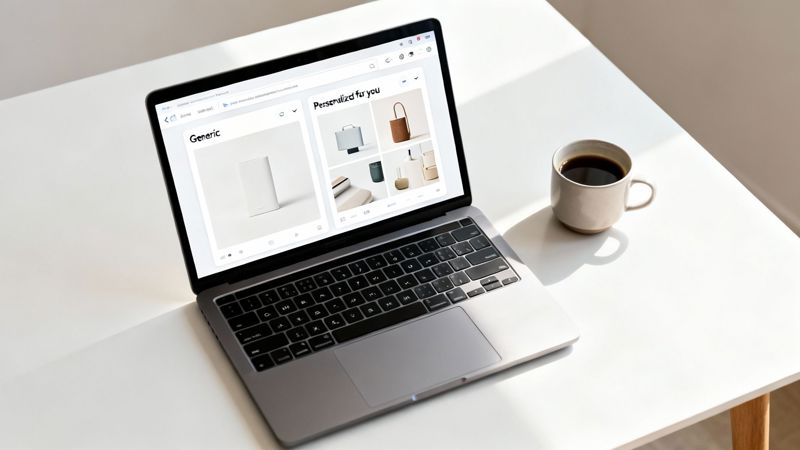
From Generic to Genuine: A Tale of Two Emails
To really get a feel for the impact, let's look at a practical example from a travel company.
The 'Before' Scenario (Generic Image): A customer, Sarah, fills out a travel quiz and mentions her dream vacation is a relaxing beach trip to Bali. A week later, she gets a promotional email with a generic stock photo of a snowy mountain range. The discount might be good, but the visual is completely disconnected from what she told them. The message feels impersonal, and she ignores it.
The 'After' Scenario (Personalized Image): The same company uses Sarah's quiz responses to fuel its next campaign. This time, her email features a stunning, dynamic image of a Bali beach with her name right on it, saying, "Sarah, your Bali getaway is waiting." The visual instantly connects with her dream, making the offer feel less like an ad and more like a personal invitation.
This simple change transforms the entire interaction. The personalized image acknowledges her input and makes the call to action way more compelling.
How Dynamic Images Work with Zero-Party Data
Dynamic image personalization uses the data customers give you to generate unique visuals for every single recipient, all at scale. Tools like OKZest automate this process. You can insert merge tags into an image template, much like you would for text in an email.
These merge tags can pull from any piece of zero-party data you’ve collected:
- Customer Name: "Welcome back, Jessica!"
- Stated Interests: An image featuring running shoes for a customer who identified as a runner.
- Purchase Goals: A certificate image with the name of a course a user said they wanted to complete.
- Location Preference: A banner showing the skyline of a city a user is interested in visiting.
This creates a hyper-relevant visual experience delivered directly in an email, a social media message, or on a website. In fact, using explicitly shared data can boost personalization effectiveness by 40% over inferred data types.
With platforms like OKZest, a coach can automatically embed a client's specific goals from their profile into a motivational image—a tactic that has been shown to lift click-through rates by 14-20% in email campaigns.
By turning explicit customer preferences into compelling visuals, you create a powerful feedback loop. Customers see the direct benefit of sharing their data, which encourages them to share more in the future, further deepening the relationship.
This strategy closes the gap between data collection and customer delight. You prove that you’re not just collecting data for the sake of it—you’re using it to create genuinely better experiences.
For a deeper look into the mechanics, check out our guide on dynamic image personalization for email.
Your Zero Party Data Implementation Checklist
Alright, you understand the what and the why. Now for the how. Turning all this great theory into a practical plan is where the real magic happens. This isn't just a one-off project; think of it as a new, more thoughtful way of building relationships with your customers.
Here’s a simple, step-by-step playbook to get your zero-party data strategy off the ground and running smoothly.
Phase 1: Define Your Goals
Before you ask a single question, you need to know exactly why you're asking. What are you trying to accomplish? Don't just collect data for the sake of it—that’s how you end up with a messy, useless pile of information.
Start by framing your objective. For an e-commerce brand, a vague goal like "get more data" is useless. A sharp, actionable goal is much better: "Increase repeat purchases by 15% by understanding our customers' style preferences." Now you have a clear North Star. This single goal will guide every decision you make, from the questions you ask to the tools you use.
Phase 2: Choose Your Collection Methods
With your goal locked in, it's time to pick the right tools for the job. The best method always depends on who your audience is and what you need to learn from them.
- For Product Recommendations: An interactive quiz or a guided selling tool is perfect. They feel less like a survey and more like a personalized shopping assistant.
- For Content Personalization: A clean, easy-to-use preference center is your best friend. Let customers tell you directly what kind of content they want to see from you.
- For Quick Feedback: On-site polls or micro-surveys are great for capturing what a customer is thinking right now without getting in their way.
The trick is to make the experience feel natural and helpful, not intrusive.
Phase 3: Design Your Value Exchange
This is the absolute heart of your strategy. No one gives you information for free. You have to offer something genuinely valuable in return.
Your value exchange is the core promise you make to your customers: "Give us this insight, and we will give you this specific benefit in return." This transparent bargain is the foundation of trust in a zero party data strategy.
What does that look like in practice? It could be a spot-on product recommendation, a discount on their next order, or exclusive access to a new guide. Whatever it is, make the benefit obvious, immediate, and worth their time.
Phase 4: Integrate Your Tech Stack
The data you collect is only useful if you can actually act on it—fast. Your collection tools need to talk to your marketing platforms seamlessly. When a customer finishes a quiz, that information should instantly zip over to your email service provider or CRM.
This is what makes real-time personalization possible. For example, a customer's quiz answers can automatically trigger a follow-up email with dynamic, personalized images from OKZest that reflect their choices. A connected tech stack takes the manual work out of the equation and turns customer insights into action. From here, it's all about launching, analyzing what works, and tweaking your approach to get even better results.
Frequently Asked Questions About Zero-Party Data
Even after you've got the basics down, a few practical questions always pop up when you start building a zero-party data strategy. This section is all about giving you quick, clear answers to clear up any confusion and help you get going with confidence.
Let’s tackle some of the most common questions.
What Is the Real Difference Between Zero and First-Party Data?
This is easily the most common question, and the distinction is a big deal. First-party data is information you observe about what a customer does. Think of it like collecting clues—what they clicked, which pages they looked at, and what they bought. It's valuable, but you're still making an educated guess about what they want.
Zero-party data is what customers explicitly tell you about themselves, on purpose. You're not guessing; they're declaring it.
- First-Party Data: A customer keeps looking at running shoes on your site. You guess they're a runner.
- Zero-Party Data: That same customer ticks a box in their profile that says, "I'm a runner."
One is an inference, the other is a fact straight from the source. Zero-party data cuts out the guesswork completely, giving you a direct line into your customer’s real motivations.
What Incentives Actually Work for Data Collection?
The trick is to offer a fair trade. People are much more willing to share information when they see a clear, immediate benefit for them. Demanding data just comes off as pushy and will turn people away, but offering genuine value builds trust.
The best incentives are the ones that make the customer's experience better. Sure, discounts work, but personalized recommendations, exclusive content, or early access to new products often perform even better because they prove you’re using the data to serve them.
Think less about one-off bribes and more about long-term perks that make their journey with your brand smoother and more enjoyable.
How Can a Small Business Start Collecting This Data?
You don't need a huge budget or a complicated tech setup to get started. The best approach is to pick one high-impact area and start small. An engaging, simple tool is a great place to begin.
For example, you could:
- Build a Simple Quiz: Use a free or low-cost tool to create a "Find Your Perfect Product" quiz.
- Add a Post-Purchase Survey: After a sale, send a quick one-question email asking about their goals for the purchase.
- Upgrade Your Welcome Email: Ask new subscribers to click a link that best describes what they’re interested in.
The whole point is to just start the conversation. Kick things off with one simple method, show your customers you’re listening by using their feedback, and then build from there. Every small step delivers insights you can use to make your strategy better over time.
Ready to turn customer insights into captivating visual experiences? OKZest helps you automate personalized images for every email, newsletter, and social media message. Stop sending generic content and start building real connections. Create your first dynamic image for free at okzest.com.