At its core, an enterprise email personalization platform is a powerful engine built to deliver highly relevant, one-on-one email experiences on a massive scale. It goes way beyond just dropping a first name into the subject line with a basic merge tag. Instead, it uses real-time data to customize every single part of an email for each person who receives it, turning a mass broadcast into something that feels like a personal conversation.
Why Generic Email Campaigns No Longer Work
Let's be honest, everyone's inbox is overflowing. Getting a customer's attention in that sea of noise is a huge challenge. The old-school approach of sending the same generic email to your entire list is like shouting with a megaphone into a busy crowd—most people just tune it out because the message isn't for them. This leads directly to low engagement, high unsubscribe rates, and money down the drain.
Today's customers don't just appreciate personalization; they flat-out expect it. An email that starts with "Dear Valued Customer" is an immediate red flag that the brand doesn't really know them. This is where an enterprise email personalization platform completely changes the game.

From Broadcasting to Meaningful Conversations
Instead of that megaphone, imagine you could have a direct, meaningful conversation with every single person on your email list, all at the same time. That’s exactly what a personalization platform does. It acts as an intelligent layer that automatically builds unique messages by pulling from data points like purchase history, browsing behavior, location, and more.
This technology allows brands to:
- Create dynamic content that changes based on who is looking at it.
- Insert personalized images, like adding a recipient’s name or company logo.
- Show relevant product recommendations based on what they've clicked on before.
- Build genuine relationships by making each customer feel seen and understood.
Email is still the backbone of enterprise marketing, with an estimated 5.02 billion global users by 2026. Its power is magnified when you add true personalization. Brands that get it right see their ROI jump to around 43:1, a massive leap from the 12:1 ROI for those who rarely personalize.
The True Cost of Ignoring Personalization
Sticking with generic campaigns isn't just a missed opportunity—it means you're actively falling behind. As your competitors use smarter tools to create tailored experiences, your one-size-fits-all emails become less and less effective. The risk isn't just a dip in your open rates (which you can measure against industry benchmarks for email open rates), but a complete disconnect with your audience.
An enterprise email personalization platform like OKZest gives you the tools you need to not just keep up, but to lead the pack by turning every single email into a powerful, revenue-driving interaction.
Understanding the Core Features That Power Personalization
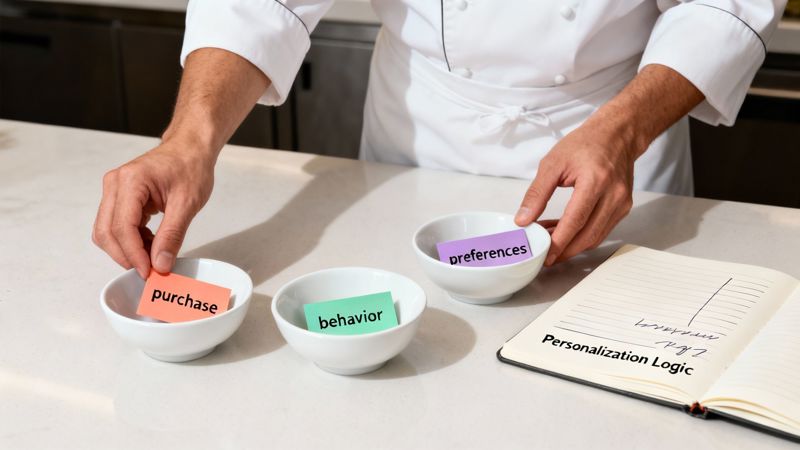
To really get what makes an enterprise email personalization platform tick, you have to look under the hood. Think of it like a master chef in a Michelin-star kitchen. The platform has access to all the best ingredients (your customer data) and uses a set of proven recipes (personalization logic) to create a unique dish for every single guest. No two are exactly alike.
Each feature is a specialized tool in this kitchen, built to handle a specific part of the process. Together, they turn a static email template into a living, breathing piece of communication that adapts in real-time to each person who opens it.
Let's break down the essential components that bring this kind of one-to-one marketing to life at scale.
To give you a clearer picture, here’s a quick rundown of the essential functionalities you'll find in a top-tier platform. These are the tools that marketing teams rely on to move beyond basic personalization and create truly dynamic experiences.
Key Features of an Enterprise Personalization Platform
| Feature | Description | Example Use Case |
|---|---|---|
| Dynamic Merge Tags | Automatically inserts customer-specific text (name, city, etc.) into the email copy. | "Hi {{FirstName}}, see what's new in {{City}} this week!" |
| Dynamic Images | Generates unique images for each recipient by embedding personalized text or graphics. | An airline sending a boarding pass with the traveler's name and seat number on it. |
| Conditional Logic | Displays different content blocks based on predefined "if-then" rules tied to user data. | Showing a "VIP Discount" banner only to customers with a high lifetime value. |
| Data Source Integration | Connects to CRMs, CDPs, and other data warehouses to pull in real-time information. | Pulling a customer's loyalty points balance directly from your rewards system. |
| Fallback Values | Sets a default value to display if a specific piece of data is missing for a recipient. | Using "Valued Customer" as a greeting if the first_name field is empty. |
Each of these features plays a crucial role, but it's how they work together that truly unlocks the platform's power. Let's dig a little deeper into the most important ones.
Dynamic Text and Merge Tags
The absolute foundation of personalization is the dynamic merge tag. This is the simple-yet-powerful feature that lets you drop customer-specific info like a first name or company directly into a subject line or email body. For example, {{first_name}} becomes "Sarah," and {{company_name}} becomes "Acme Corp."
But enterprise-level tools go way beyond just first names. You can create merge tags for almost any data point you've collected:
- Last Purchase Date: "It's been a while since your last order on {{last_purchase_date}}."
- Loyalty Points: "You have {{loyalty_points}} points ready to spend!"
- Account Manager: "If you have any questions, just reach out to your dedicated rep, {{account_manager_name}}."
This is how you make every piece of text feel like it was written just for that person, based on their actual history with your brand.
Dynamic Images: The Visual Merge Tag
If merge tags customize your text, dynamic images do the same for your visuals. This is a complete game-changer. It lets you programmatically embed personalized text, logos, or other graphics directly onto an image, so every single recipient sees a unique version.
Think about it: an event organizer can send a digital ticket with the attendee’s name and a QR code already printed on it. A SaaS company could send a welcome email with a screenshot of their dashboard featuring the user's actual name and company logo. This is exactly what OKZest specializes in, helping teams automate the creation of millions of these custom images for their campaigns.
A generic stock photo is easy to ignore, but an image featuring the recipient's own name or company creates a powerful pattern interrupt in the inbox. It immediately grabs their attention and makes the message feel exclusive.
Conditional Logic and Business Rules
This is where the platform’s brain really kicks in. Conditional logic lets you set up "if-this, then-that" rules to show different content blocks based on who the recipient is or what they've done. You're essentially building multiple paths within a single email template.
This is the engine that drives true email marketing automation. For instance, an e-commerce brand could build rules like:
- IF
customer_tieris 'VIP', THEN show the "Exclusive VIP Offer" banner. - IF
last_purchase_categoryis 'Running Shoes', THEN show the "New Arrivals in Running Gear" product block. - IF
locationis 'New York', THEN show an invitation to an in-store event in Manhattan.
This guarantees every section of the email is as relevant as possible, which naturally drives up engagement.
Fallback Values for a Flawless Experience
So, what happens when your data isn't perfect? Someone might be in your CRM without a first name. Sending an email that starts with "Hi ," instantly shatters the illusion of personalization and just looks sloppy.
That’s where fallback values come in. Any good platform will let you set a default value for your merge tags. If {{first_name}} is blank, the fallback could be "there," making the greeting "Hi there." It’s a simple safety net that protects the user experience and keeps your brand looking sharp, even when working with imperfect data.
How Personalization Platforms Fit Into Your Tech Stack
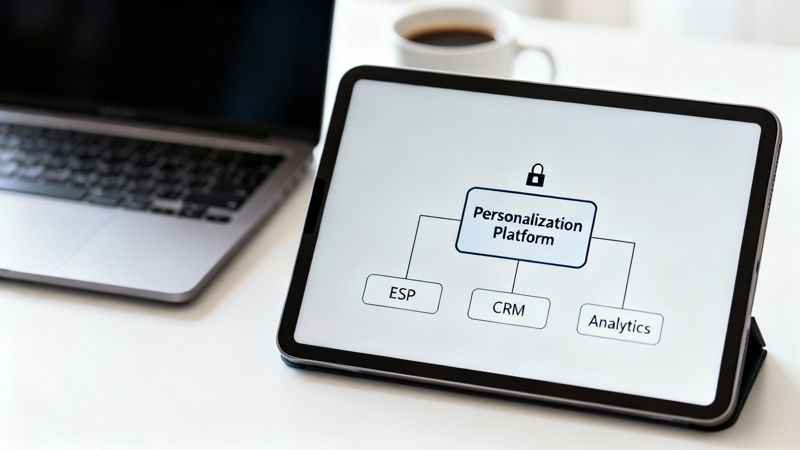
The thought of adding another tool to your marketing stack can feel overwhelming. But here’s the good news: a modern enterprise email personalization platform isn’t here to replace your core systems. It’s designed to make them better.
Think of it as a smart, flexible layer that sits on top of your existing setup, making the tools you already rely on far more powerful. It’s a specialized plugin for your Email Service Provider (ESP). Your ESP is fantastic at sending emails, but it was never built to generate millions of unique, personalized images on the fly.
A platform like OKZest fills that specific gap. It integrates seamlessly so you can embed dynamic visuals without having to migrate contact lists, rebuild email templates, or disrupt your established workflows. You simply connect the personalization engine to your current setup—whether that’s Mailchimp, Klaviyo, HubSpot, or another provider—and immediately upgrade its capabilities.
Choosing Your Integration Method
Not all integrations are created equal. The best platforms give you multiple ways to connect, ensuring you can get up and running no matter what your marketing stack looks like. The right method for you will depend on your team's technical resources, the complexity of your data, and just how dynamic your content needs to be.
There are three main ways to get connected:
- Deep API Connections: Perfect for real-time, data-heavy personalization.
- Simple HTML Snippets: A universal method for embedding dynamic content anywhere.
- Merge Tag Systems: The go-to approach for maximum ESP compatibility.
This flexibility means a startup can get moving in minutes with simple merge tags, while a large enterprise can build a sophisticated, real-time system using APIs.
Connecting Through APIs for Real-Time Data
For businesses that need to pull live information—like flight details, current loyalty points, or real-time inventory levels—an API (Application Programming Interface) is the gold standard. This method allows the personalization platform to talk directly with your other systems, like your CRM or product database, in real time.
When a subscriber opens their email, the platform can make an API call to fetch the very latest data and generate a perfectly current image on the spot. This is a game-changer for time-sensitive content like boarding passes with live flight information or e-commerce emails showing up-to-the-minute stock availability. For a deeper dive, check out our guide on API integration best practices.
Universal Compatibility with HTML and Merge Tags
The simplest and most common integration method relies on merge tags and HTML snippets. This is the secret sauce that lets platforms like OKZest work with nearly any ESP on the market.
The personalization platform generates a unique URL for each dynamic image. You then insert this URL into your email template using a standard merge tag.
When your ESP sends the email, it automatically fills in the merge tag with the recipient's specific data, like their name or customer ID. When the recipient opens the email, their browser requests the image from that unique URL, and the personalization platform generates and delivers the custom visual in an instant.
This elegant solution requires zero complex backend coding. If you can copy and paste a merge tag into your email editor, you can use a powerful personalization platform. It’s a simple yet highly effective way to bring dynamic content to your existing email campaigns without needing a developer.
Putting Personalization into Practice with Real-World Examples
It's one thing to talk about personalization in theory, but the real magic happens when you see it in action. These platforms aren't just for massive e-commerce brands; they're powerful engines for driving real connection across all sorts of industries, from event management and real estate to B2B sales.
The goal is always the same: turn a generic, forgettable touchpoint into a unique experience. When a message includes details that are actually specific to the recipient, it cuts through the inbox noise and makes an instant connection. You're no longer just broadcasting a message—you're starting a conversation. That's how you build real loyalty.
Creating Unique Event Experiences
Think about the last event you registered for. You probably got a standard confirmation email with a bland "Your Ticket" PDF attached. It works, sure, but it’s completely impersonal and easy to lose track of.
Now, imagine a different experience. Instead of a generic attachment, the email itself contains a dynamic image—a personalized digital ticket created just for you.
This single visual could automatically pull in:
- The attendee’s full name in a big, easy-to-read font.
- Their unique QR code for a quick scan at the door.
- A list of the specific breakout sessions they signed up for.
- A friendly, personalized welcome, like, "We can't wait to see you in New York, Sarah!"
This screenshot from OKZest shows just how simple it is to set up a template for an event ticket, with fields ready for the guest's name and a unique barcode. The platform handles this for thousands of attendees automatically. Each person gets a ticket that feels like it was made just for them, which gets them more excited for the event and cuts down on any pre-show confusion.
Personalizing Real Estate Outreach
Let's switch gears to real estate, an industry where personal connection is everything. An agent needs to follow up with a potential buyer who seemed interested in a particular house. Sending a standard email with a few property photos is fine, but it’s not going to stand out.
Using a platform like OKZest, that agent can send an email with a dynamic image of the property’s front door, but with one key difference: the potential buyer's last name is digitally placed on the welcome mat or mailbox. A photo of a home with "The Smith Family" on the mat is a world away from a generic listing picture.
This simple visual trick does something incredibly powerful—it helps the buyer form an emotional connection. It shifts the conversation from, "Here's a house for sale" to "Picture your family living here." That's a far more compelling message.
This exact tactic works just as well for agencies, consultants, or anyone who needs their outreach to feel exclusive and highly relevant.
Driving B2B Sales Engagement
In the B2B world, just getting a prospect to open your email is a major win. Sales teams send out hundreds of messages, and most of them get ignored. This is where a personalization platform can give them a serious edge.
A sales rep can create a dynamic image template that automatically pulls the prospect’s company logo into a visual. Imagine an email featuring a mockup of a report or a presentation slide, with the prospect's logo sitting right next to the rep's own company logo.
It immediately shows the prospect that this isn't another careless email blast. The sender took the time to do their research and focus on their business. It’s a powerful pattern interrupt that can dramatically increase reply rates and, ultimately, book more meetings.
Whether it's an email, a DM on social media, or even a chatbot message, these platforms give your team the tools to create moments that matter. They prove you see your customers as people, not just names in a database—and that's the foundation of any great business relationship.
A Step-by-Step Guide to Launching Your Personalization Strategy
Successfully rolling out a new personalization strategy isn't about flipping a switch and hoping for the best. It’s a deliberate process that turns ambitious goals into real, measurable results. You need a clear roadmap that gets your teams, tech, and data all pointed in the same direction.
Think of it like building a house—you can't start putting up walls without a solid foundation. The very first step is figuring out what success actually looks like for your business. Moving from generic email blasts to true one-to-one conversations is a big leap, and you need clear objectives to guide the way.
Phase 1: Define Your Goals and Audit Your Data
Before you even think about looking at different platforms, you have to nail down your primary goals. Are you trying to boost customer lifetime value? Increase click-through rates on a specific campaign? Maybe you're focused on slashing cart abandonment. Whatever your objectives are, they will dictate the data you need and the features you should prioritize.
Once your goals are crystal clear, it’s time for a thorough data audit. This means digging into:
- Identifying Data Sources: Where does all your customer information live? Map out everything—your CRM, e-commerce platform, analytics tools, and any other data warehouses.
- Assessing Data Quality: Is your data clean, accurate, and easy to access? Look for gaps, like missing first names or incomplete purchase histories, that need to be fixed.
- Ensuring Data Connectivity: How are these different sources going to talk to each other and feed into your personalization engine?
This groundwork is absolutely critical. Without high-quality, accessible data, even the most advanced platform will fall flat. It’s the fuel for your entire strategy.
Phase 2: Choose the Right Platform and Run a Pilot
With a solid understanding of your goals and your data landscape, you can start evaluating platforms. You're not just looking for a tool that meets your technical requirements; you need a solution that supports your team’s workflow. The right platform should offer project and role management features that make it easy for marketing, sales, and creative teams to collaborate.
Instead of jumping into a full-scale rollout, start with a limited pilot campaign. This lets you test your strategy in a controlled environment, measure the results, and make adjustments without disrupting your entire marketing operation.
A pilot campaign is your real-world laboratory. It gives you invaluable insights into what actually clicks with your audience, helping you fine-tune your approach before scaling up. This is how you minimize risk and maximize your chances of success.
The real value of an enterprise email personalization platform becomes obvious when you look at the disconnect in the market. While 77% of marketers already use email for personalized content, a staggering 59% of Americans say irrelevant emails cause them stress. This massive gap is exactly where the right platform can make a difference. You can learn more about how consumers react to email marketing.
The graphic below shows how a personalization platform can adapt to different industries, creating more engaging touchpoints for customers.
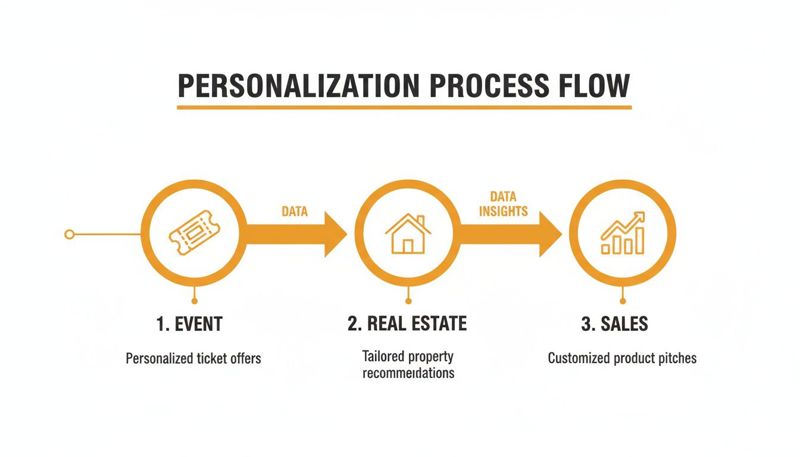
This flow demonstrates how one platform can handle diverse use cases, from event management to B2B sales, just by pulling in the right data points.
Phase 3: Measure, Scale, and Optimize
Once your pilot is wrapped up, it's time to analyze the results. Don't just glance at open and click rates; focus on the metrics that tie directly back to the goals you set in Phase 1.
Key Performance Indicators (KPIs) to keep a close eye on include:
- Conversion Rate Uplift: How did the conversion rates of your personalized emails stack up against your generic, control versions?
- Revenue Per Email: Calculate the direct revenue generated from your personalized campaigns to show a clear return on investment.
- Customer Lifetime Value (CLV): Over time, track whether the segments receiving personalized content show a higher CLV.
Use these insights to refine your approach. If a certain type of dynamic image is driving killer engagement, build more campaigns around it. If a specific data source isn't adding much value, rethink its role in your strategy. This continuous loop of measuring, scaling what works, and optimizing is the secret to a personalization strategy that lasts.
The Future of Customer Engagement Is Visually Personalized
The whole landscape of customer communication has changed. Generic, one-size-fits-all messages don't just get ignored anymore—they create the noise. For any large business trying to build real, lasting relationships, hyper-personalization isn't just a nice-to-have; it's the new baseline. This is about more than just slotting a customer's first name into an email. It’s about showing you actually understand who they are and what they need.
The core idea is simple but incredibly powerful: treat every single customer like they're your only one. An enterprise email personalization platform is the engine that makes this possible, even when you're dealing with millions of people. By pulling together all your different data sources and applying some smart logic, these platforms make sure every interaction feels uniquely relevant. This is how you build loyalty today.
Beyond Text to a Real Visual Connection
The next step in this evolution is all about visuals. Personalized text is a great start, but dynamic, personalized images create an instant emotional connection that words alone just can't match. Our brains process images faster and remember them longer, making them a seriously powerful tool for grabbing attention and getting a message across in a split second.
Imagine a loyalty program update. Instead of just telling a member their new points balance, you show them a personalized digital card with their name and tier right on it. That’s the kind of experience that makes someone feel genuinely seen and valued. This is exactly what platforms like OKZest are built to automate, turning a standard email blast into millions of unique, visual conversations. You can learn more about the power of image-based personalization for large-scale email campaigns and see how it drives real engagement.
Hyper-personalization is no longer an experiment; it's a default strategy. Segmented and personalized campaigns can generate up to 760% higher revenue than generic sends, while personalized emails drive up to 6 times higher conversion rates.
The numbers don't lie. Something like 90% of email marketers agree that personalization is fundamental to their entire business strategy. And over 80% have seen a direct performance lift from using dynamic content. As this trend picks up steam, platforms that can create compelling visuals automatically become strategic partners, not just another tool in the stack.
Getting Ready for the Next Wave
Looking ahead, the tools for creating these experiences are only getting more powerful and easier to use. Technologies like advanced AI image generation are opening up new possibilities for creating completely unique visuals for every single customer, leaving static, one-off content in the dust. By embracing these capabilities now, businesses can make sure they’re not just meeting customer expectations, but blowing them away.
OKZest was built to help enterprises win in this new era. We provide the infrastructure to automate visually rich, deeply personal communications that build stronger, more profitable customer relationships. We help make sure your message isn’t just delivered—it’s felt.
Frequently Asked Questions
Jumping into personalization technology always brings up a few questions. We get it. Here are some straightforward answers to the things teams usually ask when they're looking at a platform like this.
What Is the Difference Between Personalization and Hyper-Personalization?
This comes up a lot. Personalization is what most marketers are already doing—using static data like a first name or city to make an email feel a bit more relevant. An email saying, "Hi Sarah, check out these deals in New York!" is a classic example. It works, but it’s still speaking to a broad segment.
Hyper-personalization, on the other hand, is about creating a true one-to-one moment. It uses real-time behavioral data to craft an experience unique to that single person. Imagine an email showing a product Sarah just looked at a few minutes ago, mentioning her current loyalty points balance, and including a dynamic image of that exact product with her name on it. That’s the next level.
How Long Does It Take to Implement a Platform?
It’s almost always faster than people expect. For the basics, like using merge tags and simple HTML snippets to add dynamic images, you can have your first personalized campaign live in less than an hour. It's often as simple as designing an image template and pasting the code we give you right into your email editor.
If you’re planning a more complex setup using APIs to pull in real-time data, that will naturally take a bit more time, depending on your dev resources. But modern platforms are built to let you start simple and build up from there. You don't have to boil the ocean on day one.
Is My Data Secure with a Third-Party Platform?
Absolutely, and it has to be. Security is non-negotiable for any enterprise tool. A reputable personalization platform is built from the ground up with security in mind, including full data encryption and compliance with standards like GDPR and CCPA. These platforms act as processors—they only handle the data needed to generate the personalized content and don't store sensitive personal information long-term.
Always double-check a platform’s security credentials and compliance certificates before you commit. The best partners are completely transparent about how they handle data and the infrastructure protecting it.
Will This Platform Replace My Current ESP?
Nope. An enterprise email personalization platform is designed to work with your existing ESP, not kick it out. Think of it as a supercharger for the tools you already know and love, whether that’s Mailchimp, Klaviyo, or HubSpot.
Your ESP is still the engine that sends the emails. The personalization platform just provides the high-octane, dynamic content that goes inside them. This layered approach lets you add powerful new capabilities without having to rip and replace your core marketing stack.
Ready to see how visual personalization can completely change the game for your campaigns? OKZest helps you automate millions of unique images to grab attention and build real customer relationships. Explore our features and start for free at okzest.com.