A real-time image API is a game-changer for anyone looking to connect with their audience. It automatically creates a unique, personalized image for every single customer, right when they need it. Think of it as merge tags for images—instead of just popping a name into a line of text, this technology embeds data like a customer's name, their company logo, or other unique details directly into a visual.
It’s the difference between a generic banner and a personal welcome that truly grabs attention.
What Is a Real-Time Image API
Picture this: you're about to launch an email campaign to thousands of subscribers. With the old-school approach, every single person sees the exact same hero image. It works, sure, but it’s completely impersonal. A real-time image API flips this on its head by treating each recipient like an individual.
Instead of a one-size-fits-all graphic, it generates a custom visual for each person the very moment they open their email or land on your website. This isn’t about batch-processing thousands of images ahead of time; it all happens instantly, forging a one-to-one connection at a massive scale.
This technology turns static, passive visuals into active, engaging touchpoints. When you personalize the visual experience, you capture attention in a way that generic content just can't match.
Moving Beyond Generic Content
The core idea is beautifully simple: data-driven personalization. A real-time image API links your customer data—whether it’s from your CRM, a signup form, or an external data source—to a visual template you’ve designed. The API then renders a final, unique image based on that specific person's information.
This lets you create countless variations from a single base image, all without a single minute of manual design work.
This approach gives marketers, sales teams, and event organizers the power to:
- Greet individuals by name: Display a welcome banner featuring the visitor's first name.
- Showcase relevant data: Create personalized sales proposals that include the prospect's company logo.
- Celebrate milestones: Generate custom certificates for event attendees or course graduates on the fly.
- Boost email engagement: Craft newsletter headers that speak directly to each subscriber.
At its heart, a real-time image API is about making your audience feel seen. It acknowledges that they are more than just a number on a list; they are individuals with unique identities, and personalized visuals are a powerful way to reflect that.
Real-Time vs Static Images at a Glance
To really get a feel for the value here, it helps to see a direct comparison. Static images definitely have their place, but dynamic images created with a real-time API open up a whole new world of interactive and personalized marketing. If you want to dive deeper, check out our guide on using a dynamic image API for some more advanced strategies.
Here’s a quick breakdown of how they stack up:
| Feature | Real-Time Image API | Static Image |
|---|---|---|
| Content | Dynamic and personalized for each viewer | Fixed and the same for everyone |
| Creation | Generated on-the-fly when requested | Created once and stored |
| Scalability | Infinitely scalable with a single template | Requires manual creation for each variation |
| Engagement | High, as it creates a personal connection | Lower, as it lacks personalization |
| Use Cases | Personalized emails, certificates, ads | Website logos, product photos, blog headers |
Ultimately, static images are great for branding and unchanging content, but when you need to make a personal impact and drive action, a real-time API is the way to go.
How Real-Time Image Generation Works
So, how does a real-time image API actually work its magic? You don't need to be a developer to get the gist of it. Imagine ordering a custom coffee: you start with a basic cup, the barista adds your name to make it yours, and in an instant, it's ready.
Generating a personalized image follows a surprisingly similar path. It takes a pre-made visual template, combines it with data specific to one person, and an API call is the trigger that instantly puts it all together into a final, unique image.
This diagram shows how a single, generic design can be transformed into a personal asset using this data-driven approach.
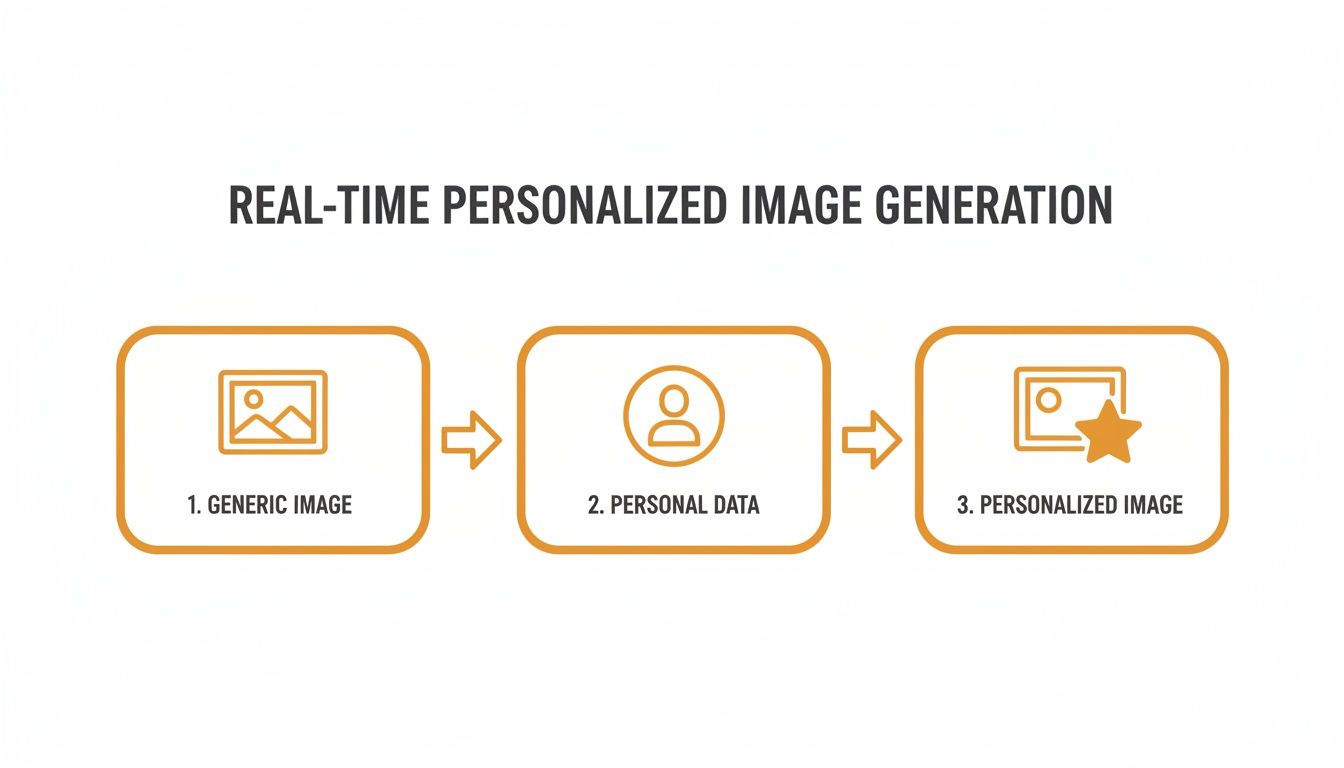
The real takeaway here is just how simple and efficient it is. One design can fuel endless personalized variations with zero manual effort.
The Core Components of Personalization
To really appreciate what's happening, let's break down the three key ingredients working together behind the scenes. Each one is essential for turning a generic graphic into a one-to-one conversation starter.
The Base Template: This is your starting point—a professionally designed image with specific spots marked for dynamic content. Think of a certificate with a blank space for a name, a newsletter banner with a placeholder for a custom greeting, or a social media graphic ready to display a user's profile picture.
The Dynamic Data: This is the information that makes every image unique. The data can come from anywhere—your CRM, an email list, or even a live external source. It could be a customer’s first name, their company, a recent purchase, or even the current weather in their city.
The API Request: This is the spark that brings the template and data together. When someone opens an email or loads a webpage, a request is sent to the real-time image API with the specific data for that user. The API then instantly builds the personalized image and sends it back.
Data Sources: The Fuel for Dynamic Images
The quality and variety of your data directly decide how personal you can get. A great real-time image API can pull information from different places to create visuals that really connect. To get the most out of your dynamic images, using an Image Prompt Crafter for creators can also help you fine-tune your visual outputs.
Common data sources include:
- Customer Relationship Management (CRM) Systems: Pulling names, company info, or purchase history to tailor sales and marketing materials.
- Email Service Providers (ESPs): Using subscriber data like their join date or location to customize newsletter content.
- External APIs: Tapping into live data, like weather forecasts, stock prices, or sports scores, for up-to-the-minute relevance.
- User Input from Forms: Generating images from information a user gives you on your website, like for a personalized quote or an event ticket.
The real power comes from combining these elements. An API call can fetch a contact’s name from your email platform and merge it with a live weather update for their city, all within a single, cohesive image generated in milliseconds.
The Importance of Fallbacks
But what happens when data is missing? A well-built system always has a backup plan. A fallback is a default value that shows up if the data you wanted isn't available.
For example, if the "first name" field is empty in your database, the image can default to a friendly "Hello there!" instead of showing an awkward blank space. This safety net is crucial. It guarantees a polished, professional look for every single image, preventing broken visuals that could wreck the user experience. Fallbacks ensure your campaign always looks complete, no matter what your data looks like.
Powerful Ways to Use Dynamic Images
Alright, let's move past the technical stuff and get into the real-world impact. How can marketers and sales teams actually use a real-time image API? These aren't just cool ideas; they're practical solutions that make high-level personalization accessible to anyone, not just developers.
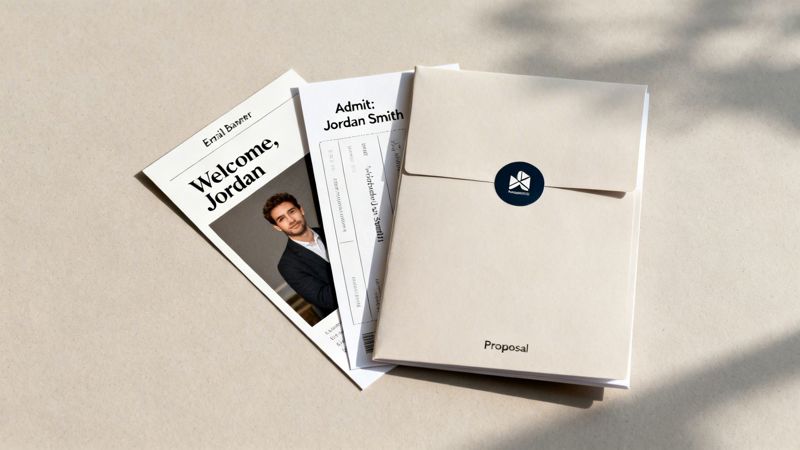
The applications are surprisingly versatile, touching nearly every part of the customer journey. Each one shows how turning a generic picture into something personal can seriously boost engagement and build a much stronger connection with your audience.
Elevate Your Email Marketing Campaigns
Email is still a marketing powerhouse, but let's be honest—inboxes are a war zone. Dynamic images help you cut through the clutter by making every email feel like it was sent to just one person. Instead of a bland, one-size-fits-all banner, picture an image that greets every single subscriber by name.
A real-time image API makes this incredibly simple. You just pop in a personalized image using a merge tag, the same way you’d add their first name to the text.
Here are a few ways to get a big impact from this:
- Personalized Welcome Banners: Greet new subscribers with an image that has their name on it. It’s a small touch that makes a huge first impression.
- Dynamic Product Recommendations: Show customers an image of the exact products they were just looking at or left in their cart.
- Location-Based Promotions: Display a graphic featuring a special offer for the subscriber's nearest store, using their location data to make it relevant.
- Milestone Celebrations: Automatically send an email with a custom image to celebrate a customer's anniversary or a loyalty program milestone.
This isn't just about looking good; it's about driving results. One study found that emails with personalized images saw a 29% higher unique click rate and a 41% higher click-to-open rate than those with plain old static images.
Supercharge Sales and Outreach Efforts
For any sales team, that first impression is everything. A personalized message will always outperform a generic template, and a real-time image API gives your sales materials a custom touch that really connects with prospects.
Think about a sales proposal. Instead of a generic cover page, imagine sending one that has the prospect’s company logo and name right on the front. It's a simple detail that immediately shows you've done your research and are serious about working with them.
This technology is at the heart of a booming market. The global image recognition market, which is what powers this kind of on-the-fly personalization, hit USD 53.3 billion in 2023. It’s expected to climb to USD 128.3 billion by 2030, growing at a powerful 12.8% each year. This growth proves just how much businesses are relying on real-time image processing to create unique visuals. You can dive deeper into the image recognition market trends to see just how fast this space is moving.
Transform Events and Online Courses
Event organizers and course creators can get a ton of value from dynamic image generation, too. Creating personalized assets on the fly saves a massive amount of manual work and gives the whole experience a much more professional feel.
Here are a few common scenarios:
- Instant Event Tickets: When someone signs up for a webinar or conference, you can instantly email them a personalized ticket with their name, a unique QR code, and all the event details.
- Automated Completion Certificates: For online courses, you can automatically generate and send a beautifully designed certificate to everyone who finishes the program. No more mail merges!
- Customized Attendee Badges: Create print-ready name badges for in-person events, each one perfectly formatted with the attendee's name, company, and title.
This kind of automation doesn't just make you more efficient; it makes your event or course feel more premium.
Enhance Websites and Chatbots
Your website is often the very first interaction someone has with your brand. With dynamic images, you can make that experience more relevant from the second they land on your page. A hero image can change to greet a returning visitor by name or show a promotion tailored to their location.
Chatbots can also go from being simple text-based tools to visually rich, helpful assistants. Imagine a chatbot that doesn't just tell a user their order status but shows them. It could generate a personalized image confirming their purchase details and delivery date, making the whole conversation feel more concrete and human.
The Business Impact of Image Personalization
When you're looking at new tech, it always boils down to one simple question: what’s the return? A real-time image API isn't just another fun creative tool; it's a strategic asset that hits your bottom line. Moving beyond generic, one-size-fits-all visuals lets you create memorable experiences that translate directly into measurable business growth.
The logic is simple. When a customer feels seen and recognized as an individual, they’re far more likely to engage. This is the crucial shift from broadcasting a message at everyone to having a one-to-one conversation, and it’s where you’ll see real results in the metrics that matter.
Boosting Engagement and Click-Through Rates
One of the first places you'll notice a difference is in your email marketing. An email with a banner that has the recipient's name or a relevant image just pops in a crowded inbox. It practically begs to be clicked, and studies consistently show that personalized content gives engagement a serious lift.
This isn't just for emails, either. Think about digital ads. An ad that dynamically pulls in a user's company name or mentions their industry feels way more relevant and a lot less intrusive. That personal touch grabs attention, drives higher click-through rates (CTRs), and ultimately brings down your cost per acquisition.
Driving Conversions and Building Loyalty
Getting more clicks is great, but the end goal is always conversion. Personalized visuals help create a much smoother and more persuasive journey for the customer. Using image personalization can seriously level up your conversion rate optimization (CRO) efforts, helping to boost conversion rates and scale profitably.
When you make a potential customer feel understood, you're building trust and smoothing out any friction in the buying process. A personalized offer, a proposal cover with their name on it, or a tailored product recommendation all work together to convince someone that your solution is the right one for them.
This has a powerful ripple effect. Customers who have a positive, personalized experience are far more likely to stick around and become loyal, repeat buyers. That focus on building real relationships is what sets standout brands apart from the rest of the pack.
A Clear Return on Investment
The explosive growth in this technology really tells the story. AI APIs, which are the engine behind services like OKZest, are projected to jump from USD 33.11 billion in 2024 to a massive USD 179.14 billion by 2030. That's a staggering CAGR of 32.2%. This kind of growth only happens when businesses see a clear, undeniable ROI.
The impact on retention is especially powerful. Some studies show that personalized visuals can improve customer retention by up to 30% in email campaigns alone.
Here are the key metrics that get a boost from image personalization:
- Higher Email CTRs: Personalized images make your emails more compelling and clickable.
- Increased Ad Engagement: Dynamic ads feel more relevant, which means better performance.
- Improved Conversion Rates: A tailored experience guides users more effectively toward making a purchase.
- Stronger Brand Loyalty: Customers feel valued, which encourages them to come back and tell their friends.
At the end of the day, a real-time image API is much more than a feature—it's a revenue-driving engine. By investing in personalization, you’re really investing in stronger customer relationships and a healthier bottom line. If you're ready to dig deeper, our guide on the image generation API has even more examples.
Integrating Dynamic Images Into Your Workflow
Getting started with a real-time image API is way easier than you might think, whether you’re a seasoned developer or a marketer who’s never touched a line of code. The beauty of this technology is its flexibility—it gives you multiple ways to add powerful personalization to your campaigns and website.
The whole point is to have a seamless way to embed unique visuals, and modern platforms like OKZest are built to plug right into the tools you already use. That means you can get up and running fast without having to overhaul your current process.

No-Code Solutions for Marketers
For most marketers, the simplest path forward is using merge tags. If you’ve ever personalized email text with a customer’s name, you already know the concept. Platforms like OKZest work with 99% of Email Service Providers (ESPs), including popular tools like Mailchimp, Klaviyo, and Instantly.
Instead of messing with code, you just pop a special URL into your email template. This URL acts as a merge tag for your image, pulling in subscriber data—like their first name or company—to generate a one-of-a-kind visual the moment they open the email.
It's just as simple for websites. You typically just copy and paste a small HTML snippet right where you want the dynamic image to show up. This no-code approach puts advanced personalization within reach for everyone, no matter their technical skill level.
Deeper Control with Direct API Integration
For those who need more control or want to build custom features, direct API integration is the way to go. This route is perfect for developers who want to weave real-time image generation directly into their software, websites, or mobile apps.
A real-time image API gives you a clear endpoint where you can send data and get a personalized image back. This opens the door to more advanced uses, like:
- Automated certificate generation for online courses.
- Personalized onboarding visuals inside a SaaS app.
- Dynamic image creation in custom-built chatbots.
This dual approach—offering both no-code simplicity and full API control—is a core strength of modern personalization platforms. It ensures that businesses of all sizes can implement this technology in a way that best suits their needs. To see how it works on the technical side, check out our in-depth API integration tutorial.
Key Considerations for a Smooth Rollout
As you start using dynamic images, a few key things will ensure your campaigns run smoothly and deliver a great user experience. A professional platform is built to handle these challenges for you, so you can focus on creating stunning visuals.
The API management market, which is the engine behind services like OKZest, has seen explosive growth. It's projected to jump from USD 9.70 billion in 2025 to an expected USD 49.95 billion by 2032. This huge demand reflects how critical reliable and seamless integrations are for powering dynamic content everywhere.
Here are the critical elements to keep in mind:
- Performance and Speed: Images have to load instantly. A solid real-time image API uses a global Content Delivery Network (CDN) to generate and serve images in milliseconds. This guarantees fast load times that won’t slow down your website or email.
- Scalability: Your solution needs to grow with you. Whether you’re sending an email to a few hundred people or a million, the infrastructure should handle massive request volumes without a hiccup.
- Security and Data Privacy: Protecting customer data is non-negotiable. Make sure any platform you choose follows strict security protocols to handle personal information responsibly.
By taking care of these factors, a professional-grade platform clears the technical hurdles, making it easy to integrate powerful, personalized visuals into your workflow and build stronger connections with your audience.
What's Your Next Move in Personalized Marketing?
We've unpacked how a real-time image API works and the serious impact it can have on your business. If there's one thing to take away, it's this: this technology is a complete game-changer for making real, one-to-one connections at scale. It’s the difference between shouting a generic message at a crowd and having a personal conversation with every single customer.
When you move past static, one-size-fits-all visuals, you start building real engagement and stronger customer relationships, which ultimately drives more revenue. Personalized images grab attention in a way generic stock photos never could, turning passive viewers into active participants in your brand’s story. It just makes your marketing more effective and your brand more memorable.
Making Personalization Possible for Everyone
Here's the best part: this kind of personalization isn't just for massive companies with huge dev teams anymore.
Tools like OKZest make advanced personalization accessible to everyone, from small businesses and solo consultants to growing marketing agencies. The combination of no-code simplicity and robust API control means you can start small and scale your efforts as your needs evolve.
This completely tears down the old barriers that kept highly customized campaigns out of reach for most businesses.
Finding Your First Opportunity
So, where do you start? Your next step is to think about where a personal touch could make the biggest difference in your customer's journey. The era of dynamic, personalized marketing isn't coming—it's already here. Begin by finding one key interaction that currently feels a bit cold or impersonal.
Not sure where to look? Consider these starting points:
- Onboarding Emails: Could a welcome banner with the new user's name make a stronger first impression?
- Event Registrations: Would an instantly generated, personalized ticket make your attendees feel more valued?
- Sales Proposals: Could a custom cover with the prospect's company logo help your proposal stand out from the stack?
Each of these is a perfect chance to use a real-time image API to forge a stronger connection. By focusing on just one high-impact area, you can see the results for yourself and build momentum to do even more.
Got Questions? We've Got Answers
Jumping into any new tech brings up a few questions. Let's walk through the most common ones we hear about real-time image APIs so you can get started with total confidence.
Do I Need to Be a Developer to Use This?
Not at all. While our API is there for developers who want to build deep, custom integrations, we built OKZest for marketers first.
For the most popular uses—like personalizing email campaigns or adding dynamic banners to your website—you'll just use simple merge tags or copy-paste HTML snippets. If you're comfortable with your everyday marketing tools, you'll feel right at home.
Will Dynamic Images Slow Down My Website or Emails?
Nope. A professional real-time image API is engineered from the ground up for speed. Images are generated in milliseconds and then delivered through a global Content Delivery Network (CDN), which caches them in servers close to your users.
This all happens in the blink of an eye, ensuring lightning-fast load times that won't hurt your site performance or email deliverability one bit.
What Happens if a Customer's Data Is Missing?
This is a great question, and it's handled by a simple but powerful feature called fallbacks. You can set up a default image or a piece of text to show up whenever a specific bit of data is missing. This keeps everything looking polished and professional, every single time.
For example, if a subscriber’s first name isn't in your database, the image can display a friendly "Hello there!" instead of an awkward blank space. This little safety net prevents broken-looking visuals and keeps the user experience top-notch, no matter what your data looks like.
Fallbacks are your insurance policy for personalization. They guarantee that every single image, whether it's personalized or not, looks complete and professional. It's all about protecting your brand and keeping your campaigns looking sharp.
How Does This Work for Really Big Campaigns?
Scalability is at the core of any serious real-time image API. These systems are built on powerful cloud infrastructure designed to handle huge volumes without breaking a sweat.
Whether you're generating a few hundred images for a targeted email blast or millions a day for a massive enterprise, the architecture is built to perform. Our plans are tiered, so you can easily scale your usage up or down as your needs change. You only ever pay for what you actually use.
Ready to create stunning, personalized visuals that grab attention and drive results? With OKZest, you can automate image creation with our simple no-code and API solutions. Start personalizing for free today.