What if you could send an email where the main graphic greets each customer by name? Or maybe it shows their current reward points, updated to the very second they open it. That’s the magic behind real-time image generation. It’s a technology that creates a totally unique, personalized visual for every single person, at the exact moment they see your content.
What Exactly Is Real-Time Image Generation?
Think of it like a mail merge, but for images. You’re probably used to pulling in a customer’s name to personalize a sentence. This is the same idea, but instead of text, you’re dynamically building a brand new image for each recipient. It all starts with a single base template, but by using individual data points, you can instantly render thousands—or even millions—of personalized variations on the fly.
This is a world away from other visual tools. Static, one-size-fits-all images just don't create a personal connection anymore. And while generative AI tools are great for creating art from text prompts, they aren't built for the kind of data-driven personalization that modern marketing needs to succeed. For a deeper dive into the technical side of AI creation, this guide to Stable Diffusion's img2img feature offers some fascinating insights.
The Power of Hyper-Personalization
Real-time image generation bridges that gap by blending smart design templates with user-specific information. The result? A visual that feels like it was personally crafted for one person, which helps build a much deeper connection with your audience. This all happens "in the moment"—the instant an email is opened or a webpage loads—so you know the information is always fresh and current.
The real advantage here is the ability to make every customer interaction feel unique. When a visual speaks directly to an individual, it cuts through the noise and grabs their attention in a way generic content just can’t compete with.
This opens up powerful opportunities for engagement that used to require a massive amount of manual work. Platforms like OKZest make this technology easy to use by handling all the complex rendering behind the scenes. That leaves you free to focus on what matters most: creating memorable experiences that get results.
Key Characteristics of This Technology
What really makes real-time image generation different is its unique mix of automation, personalization, and immediacy. These three elements work together to deliver visuals that are not just relevant, but perfectly timed.
Here’s what you get:
- Data-Driven: Images are built using specific data points straight from your CRM, spreadsheets, or APIs.
- Template-Based: You start with a master design, which keeps your branding consistent across all the variations.
- Instantaneous Rendering: The final image is created the exact moment a user requests it—not a second before.
- Scalable: The system can pump out a handful of images or millions of them without breaking a sweat.
Ultimately, this technology shifts your visual content from being a static asset to a dynamic, responsive part of your communication strategy.
How the Technology Delivers Personalized Images Instantly
So, how does this all work? The magic behind real-time image generation is actually pretty straightforward. Think of it less like complex coding and more like a high-speed, automated assembly line for your visuals. It all starts with your creativity.
You begin by designing a base image template, probably in a tool you already know and use. This template is your blueprint, complete with designated spots—or placeholders—for the dynamic content you want to add later. Then, you connect your data sources. This could be anything from a simple spreadsheet of names for an event to a live API feed pulling in customer loyalty points directly from your CRM.
The moment a user opens your email or loads your webpage, a request is fired off. This is where the assembly line kicks into high gear, instantly grabbing that specific user's data and merging it into the template you designed.
The Rendering and Delivery Engine
Once the data and template are combined, the system renders a totally unique image on the fly. This happens in milliseconds, so the user never experiences a delay. Speed is everything here; a slow-loading image kills the experience and defeats the purpose.
To make sure everything runs smoothly, especially when you're sending to thousands of people, modern platforms like OKZest have some smart tech working behind the scenes.
- Latency Minimization: The entire infrastructure is built for speed, shaving off every possible millisecond between the request and the image appearing on the user's screen.
- Smart Caching: If some data is the same for multiple users (like a company logo in an ABM campaign), the system caches that version to serve it up even faster.
- Fallback Images: What if a piece of data is missing? Instead of showing a broken image, the system displays a default or "fallback" image. This prevents ugly errors and keeps your brand looking professional.
This diagram breaks down the core process, showing how the template and data come together to create that final, personalized image.
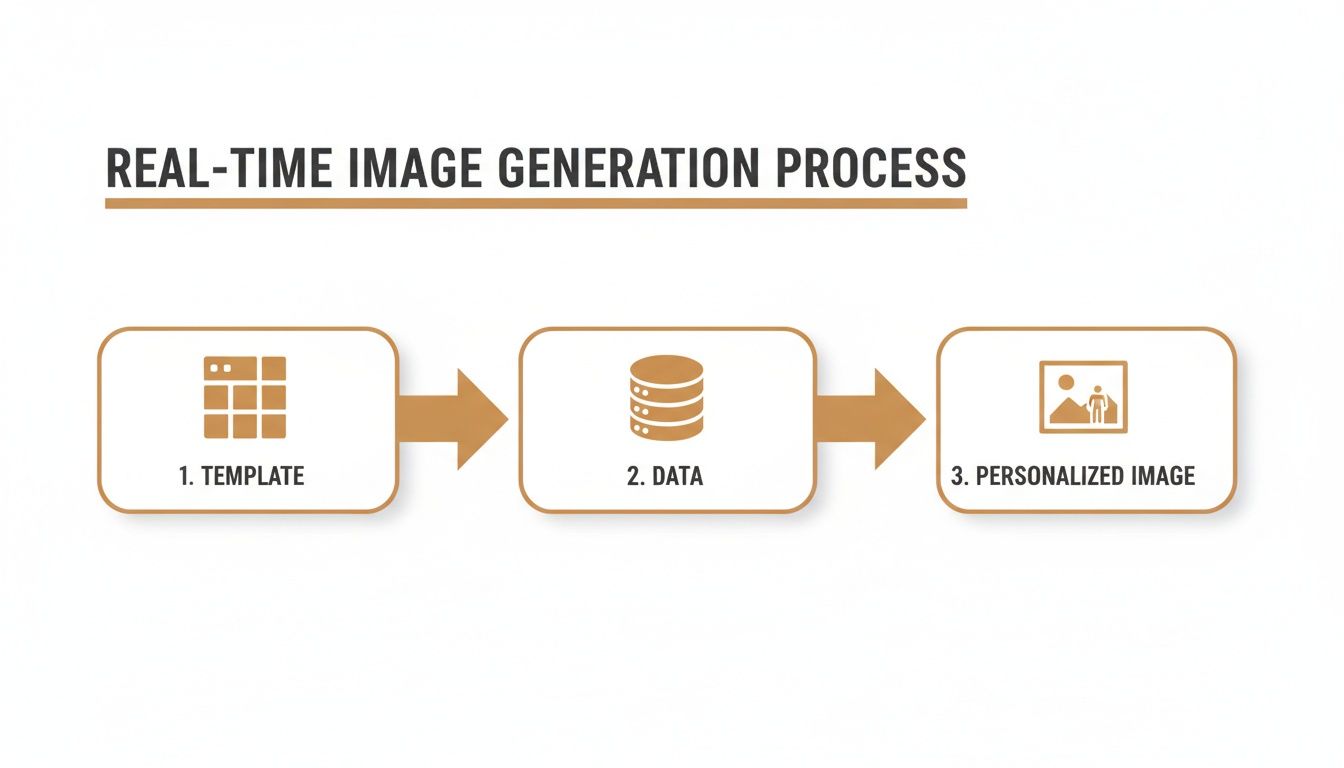
The key takeaway is the seamless journey from a static design to a dynamic, personalized asset delivered instantly to each individual.
Below is a quick breakdown of the core components that make this technology tick. This table clarifies what each part does and, more importantly, why it should matter to you as a marketer.
Core Components of a Real-Time Image Generation System
| Component | Function | Why It Matters for Marketers |
|---|---|---|
| Template Editor | A design interface where you create the base image with dynamic placeholders. | You don't need to be a developer. It puts creative control directly in your hands, allowing you to build and update campaigns quickly. |
| Data Connector | The mechanism that links your data sources (CRM, spreadsheets, APIs) to the image template. | This is what makes true personalization possible. It connects your customer insights to your visual content without manual data entry. |
| Rendering Engine | The "brain" that merges the data with the template to create the final image in real-time. | It does the heavy lifting instantly. This ensures a seamless user experience, with no awkward loading times that could cause people to lose interest. |
| Delivery Network | A global infrastructure (like a CDN) that serves the generated images quickly, no matter where the user is located. | It guarantees your images load fast for everyone, everywhere. This is crucial for global campaigns and maintaining engagement across different regions. |
Ultimately, each piece works together to create a reliable system that lets you focus on your campaign strategy, not the technical plumbing.
Market Growth and Technical Integration
This isn't just some niche gadget; it's a technology fueling a major shift in marketing. The AI image generator market is on track to hit a staggering $88.71 billion by 2032, according to a recent comprehensive market analysis. This kind of explosive growth signals that businesses are well past the experimentation phase. They're now deploying these tools at scale to get a real competitive edge.
The core principle is simple: a request is sent, data is fetched, and an image is built. Platforms handle the heavy lifting, allowing marketers to focus on strategy instead of getting bogged down in technical details.
For developers and teams needing more custom setups, these systems are almost always accessible via an API. This opens the door for deeper integrations with your own apps, websites, and complex marketing workflows. To get a better sense of what's possible, have a look at our guide on how to use a REST API for image generation. The goal is to make powerful personalization accessible to everyone, whether you're a marketer or a developer.
Powerful Ways to Use Personalized Images
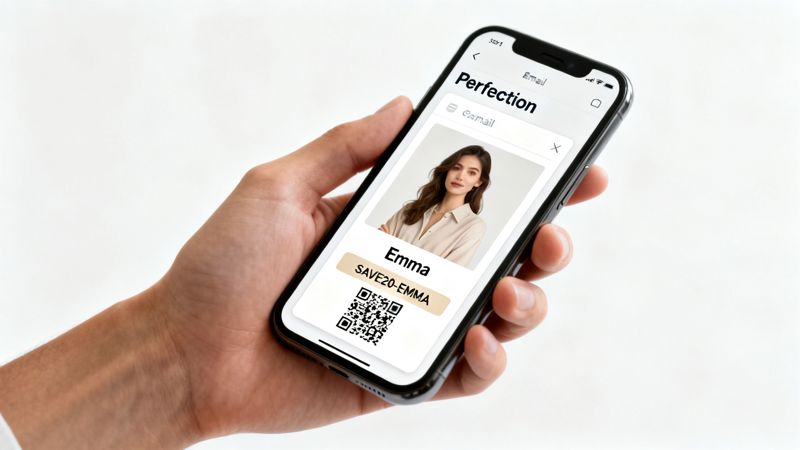
The theory behind real-time image generation is great, but its real value comes to life when you see it in action. This isn't just about cool tech; it's about creating tangible, memorable experiences across all sorts of industries—from marketing and sales to education and events. It’s how you turn generic communication into a personal conversation.
Imagine an event attendee getting a digital ticket in their email. It's not just a standard barcode. The image has their name, a unique QR code for check-in, and maybe even a personalized agenda. That small touch elevates the entire experience, making them feel like a VIP before they even walk through the door.
Driving Engagement in Marketing and Sales
In marketing, personalization is everything. Dynamic images let you create visuals that speak directly to each person, which can seriously boost engagement. A well-designed campaign makes every single customer feel seen and understood.
Think about these powerful applications:
- E-commerce Promotions: Instead of a generic "20% Off" banner, send each user an image with a unique coupon code made just for them. It immediately feels more valuable.
- Sales Outreach: Cut through the inbox noise by sending prospects an email with an image showing their company logo, their name, and a relevant call-to-action.
- Customer Loyalty: Automatically generate digital loyalty cards or rewards summaries. Show a customer their photo, their current points balance, and offers picked out just for them.
The big idea here is to swap out static, one-size-fits-all visuals for dynamic content that adapts to the individual. This approach doesn't just grab attention—it builds genuine brand affinity and gets people to act.
Streamlining Operations for Education and Events
The applications go way beyond traditional marketing. For educators and event organizers, real-time image generation is an incredible automation tool that saves time while adding that personal touch. You can create professional, customized assets at scale without any manual work.
For example, you could generate personalized certificates for students who finish a course, each with their name, the course title, and the completion date. Or you could create custom social media graphics for event speakers, automatically pulling their headshot and session details to help promote their talk.
This technology is quickly becoming a must-have for modern digital content. The market for synthetic image generation, which includes this real-time creation, is on track to hit $6.75 billion by 2030. This growth is fueled by a huge demand for personalized visual experiences, with people now spending an average of 51 minutes daily on visual content. You can explore more insights on this market trend to see where things are headed.
Broadening Your Reach Across Channels
The best part is how versatile this tech is. You can use it across just about any digital channel you can think of. Whether you're connecting with customers through an email newsletter, your website, or direct messaging, you can deliver a consistent and personalized experience.
Platforms like X (formerly Twitter) and WhatsApp are becoming huge for customer interaction. By putting dynamic images into your direct messages, you can create unique visuals that feel more like a real one-on-one conversation than an automated broadcast, solidifying relationships and boosting response rates.
How to Integrate Dynamic Images into Your Marketing
Jumping into real-time image generation is a lot simpler than it sounds. The whole point of the technology is to plug right into the marketing tools you’re already using, turning your static campaigns into something far more personal and dynamic. You don’t need to be a developer to get started, either.
The easiest method by far is using a dynamic URL, which you might know as a merge tag. Think of it as a smart link that builds a custom image for every single person on your list. You just copy this URL and paste it into the image block in your email platform, exactly like you would with a regular, boring static image.
This simple copy-paste approach works with over 99% of Email Service Providers out there. We’re talking about all the big names like Instantly, Klaviyo, and Mailchimp. That means you can start adding some serious personalization to your campaigns without having to uproot your entire workflow.

Adding Dynamic Images to Your Website
Getting personalized visuals onto your website works in a very similar way. Instead of a URL, you’ll usually grab a small snippet of HTML code. You can pop this code snippet anywhere you want a dynamic image to show up, like a welcome banner that greets logged-in users by name or a personalized call-to-action.
This lets you pull data directly from user profiles, browser cookies, or even parameters in the URL to customize the visuals on your landing pages. It creates a much more tailored experience that can make a real difference in how well your pages engage and convert visitors.
Exploring Advanced API Integration
For teams who need more control or want to build real-time image generation directly into their own products, an API is the way to go. An API (Application Programming Interface) is just a way for your software to talk directly to the image generation platform, giving you total flexibility and scale.
This is the perfect route for a few key scenarios:
- Automated Workflows: You can programmatically create thousands of images for massive campaigns or user-generated content without lifting a finger.
- Custom Applications: Build personalized visuals right into your mobile app or software, making them a core part of the user experience.
- Complex Data Connections: Connect to your own internal databases or multiple data sources to create some seriously sophisticated, data-rich images.
Making sure this integration is smooth is key to getting the most out of dynamic images. Looking into the best API integration platforms can help you connect everything to your current marketing stack and maximize your impact.
The core goal of integration is flexibility. Whether you’re a marketer using a simple copy-paste URL or a developer leveraging a full API, the technology should adapt to your workflow, not the other way around.
This range of options means businesses of any size can get in on the action. If you’re curious about the more technical side of things, our API integration tutorial is a great place to start. At the end of the day, these methods are all about removing the technical hurdles so you can start creating more engaging marketing today.
Best Practices for High-Performing Dynamic Images
Using real-time image generation effectively is about more than just plugging in data and hoping for the best. To build campaigns that are creative, secure, and high-performing, you need to follow a few core best practices. These guidelines will help make sure your visuals load fast, look great on any device, and actually land in the inbox.
First off, let's talk about template design. Your base image needs to be optimized for performance right from the start. This means using compressed background images and, just as importantly, designing with variable text lengths in mind. A name like "Jo" has to fit just as cleanly as "Christopher" without breaking your layout, so always leave plenty of space for dynamic text to expand and contract.
You also need a plan for when data is missing. Always set up fallback images. If personalization data doesn’t exist for a specific contact, a fallback ensures they see a nice, default version of the image instead of a broken one. It’s a simple step that keeps the experience professional and seamless for everyone.
Balancing Creativity with Deliverability
While it’s fun to explore all the creative possibilities, performance and security are what guarantee your message actually gets seen. Email clients can be picky about image-heavy content, so you have to strike a balance between eye-catching visuals and technical rock-solidness.
Here are three key areas to get right:
- Optimize Image Sizes: Even though images are generated on the fly, the components of your template—like the background image—should be optimized. Lighter templates mean faster rendering and loading, which is absolutely crucial for keeping your audience engaged.
- Protect Data Privacy: Be smart about the data you use. Never display sensitive personal information directly in an image, and make sure your image generation provider follows strict data security protocols.
- A/B Test Your Designs: Don't just guess what works. Test different personalization styles, designs, and calls-to-action to find out what truly connects with your audience and drives the best results.
Sticking to these practices sets your campaigns up for long-term success. The goal is a strategy that’s not just visually impressive but also technically sound, secure, and incredibly effective at hitting your marketing goals.
The market for this technology is strong and growing fast. North America is currently leading the pack, holding over 41% of the AI image generator market share. For marketers there, this means access to mature tools and solid infrastructure. But with major growth happening in Europe and Asia-Pacific, international agencies can also invest with confidence, knowing that support and adoption are on the rise worldwide. You can learn more about AI image generator market trends to get a better sense of the global landscape.
Choosing the Right Image Generation Platform
Picking the right partner for real-time image generation is a huge decision. It's one of those choices that will directly shape how successful your campaigns are. You're not just buying a piece of technology; you're looking for a reliable foundation that can scale with you, from that first test campaign all the way up to sending millions of personalized visuals.
When you're weighing your options, look for a platform that strikes the right balance between simplicity and power. A no-code editor is a must-have for marketing teams—it lets them design and launch campaigns fast, without needing to loop in a developer. But at the same time, you need a robust, well-documented API for your tech team to build custom integrations or automate image creation on a massive scale.
A Practical Evaluation Checklist
To make a smart decision, you need to focus on a few core things. A great platform is a long-term partner, not just a short-term fix. You want a solution that solves today's problems while being ready for tomorrow's challenges.
Here are the key factors to keep in mind:
- Scalability: Can the platform handle ten images just as smoothly as it handles ten million? Look for flexible pricing that grows with you, so you're not hit with surprise costs down the road.
- Ease of Use: Is the interface actually intuitive? A platform like OKZest gets this right by offering a straightforward editor for marketers and a powerful API for developers, making it accessible for every skill level.
- Collaboration Features: If you're working with a larger team, things like project and role management are non-negotiable. They help everyone work together efficiently and securely.
- Responsive Support: When you're stuck, is there a real expert you can talk to? Fast, helpful support over text or video chat can be a total lifesaver, especially when you're up against a tight deadline.
A great platform empowers you to focus on strategy and creativity by making the technical aspects of personalization feel effortless. It should feel like an extension of your team, ready to support your most ambitious ideas.
Ultimately, your choice boils down to finding a solution that fits your specific goals. For a deeper dive on what to look for, you might be interested in our complete guide to finding the best image personalization software for your needs. Choose a partner that gives you the features, support, and scalability you need to bring your creative vision to life.
Common Questions About Real-Time Image Generation
Jumping into any new tech always brings up a few questions. Let's clear the air and tackle some of the most common ones marketers ask about real-time image generation.
Is This Technology Difficult to Set Up?
Not at all. Modern platforms are built with marketers in mind, not just developers. They come with no-code editors that make creating your image templates surprisingly simple.
Getting it live is often just a matter of copying and pasting a dynamic URL or a small HTML snippet into your email service provider or website builder. You don’t need to be a technical wizard to get started.
Will Dynamic Images Slow Down My Emails?
When done right, absolutely not. Performance is a huge deal for any reputable image generation platform. They lean on powerful rendering engines and global content delivery networks (CDNs) to dish out images in milliseconds.
Smart caching also plays a big role, speeding up delivery for a snappy, seamless experience.
The key is to remember that all the heavy lifting happens on the server. By the time the image hits the user's screen, it's just a lightweight, optimized visual. Your emails and web pages will load just as quickly as they always have.
Can I Use My Brand Fonts and Designs?
Absolutely. Full customization is really at the core of what makes this technology so useful. You can upload your own brand fonts, logos, color palettes, and other design assets.
This ensures every personalized image you create is perfectly on-brand and maintains a consistent look and feel across all your marketing.
What Kind of Data Sources Can I Connect?
The technology is incredibly flexible here. You can connect it to almost any data source you can think of—from a simple CSV file or Google Sheet to more complex setups with your CRM, e-commerce platform, or a custom API.
This flexibility means you can pull in the exact data you need to create truly deep, meaningful personalization for every single person.
Ready to create stunning, personalized visuals that capture attention and drive results? OKZest makes it easy to get started with our powerful no-code editor and flexible API. Start creating for free today at okzest.com.